New York City construction projects are complex. High rise buildings, tight mechanical spaces, strict building codes, and multiple trades working at the same time create serious coordination challenges. For NYC general contractors, even a small coordination mistake can lead to costly rework, delays, and site conflicts.
This is where a structured BIM Coordination Workflow NYC becomes essential. MaRS BIM Solutions follows a clear and practical coordination process that helps general contractors reduce clashes, control cost, and improve project timelines.
Understanding BIM Coordination in NYC Construction
BIM coordination is the process of combining architectural, structural, and MEP models into one coordinated 3D environment. It helps identify design conflicts before construction begins.
In NYC projects, MEP coordination for general contractors is especially critical because:
- Mechanical rooms are compact
- Ceiling spaces are congested
- Utility routing is complex
- Local building regulations are strict
Using 3D BIM coordination, all trades work together in a shared model. Instead of discovering conflicts on site, issues are resolved digitally.
Most NYC projects require LOD 350 or LOD 400 modeling to ensure fabrication level accuracy and installation clarity.
MaRS BIM Solutions’ BIM Coordination Workflow
MaRS BIM Solutions follows a practical and results driven construction coordination process designed specifically for NYC construction projects.
1. Project Kickoff and Data Collection
The workflow starts with collecting all available drawings, models, and project specifications from the general contractor and design team. This includes:
- Architectural models
- Structural models
- MEP trade models
- Contract documents
- NYC building code requirements
A BIM Execution Plan is established to define modeling standards, file naming, LOD requirements, and coordination frequency.
2. Model Review and Standardization
All received models are reviewed in Revit coordination workflow format. The team ensures:
- Correct alignment
- Shared coordinates setup
- Modeling standards compliance
- Proper LOD definition
This step is critical before starting clash detection services New York projects demand.
3. Trade Model Integration
Mechanical, electrical, plumbing, and fire protection models are federated into a single coordination model using tools like Autodesk Revit, Autodesk Navisworks Manage, and Autodesk Construction Cloud.
The federated model allows general contractors to visualize the full building system in 3D.
4. Clash Detection Using Navisworks
Clash detection services New York contractors rely on are performed using Navisworks Manage.
Clashes are categorized into:
- Hard clashes
- Soft clashes
- Clearance issues
- Workflow conflicts
Each clash is assigned to the responsible trade with priority levels. Instead of sending vague emails, structured clash reports are generated.
This reduces confusion and improves accountability.
5. Coordination Meetings with NYC Project Teams
Weekly or biweekly coordination meetings are conducted with:
- General contractors
- MEP contractors
- Fabricators
- Project managers
During meetings:
- Clashes are reviewed live
- Solutions are discussed
- Responsibilities are assigned
- Deadlines are fixed
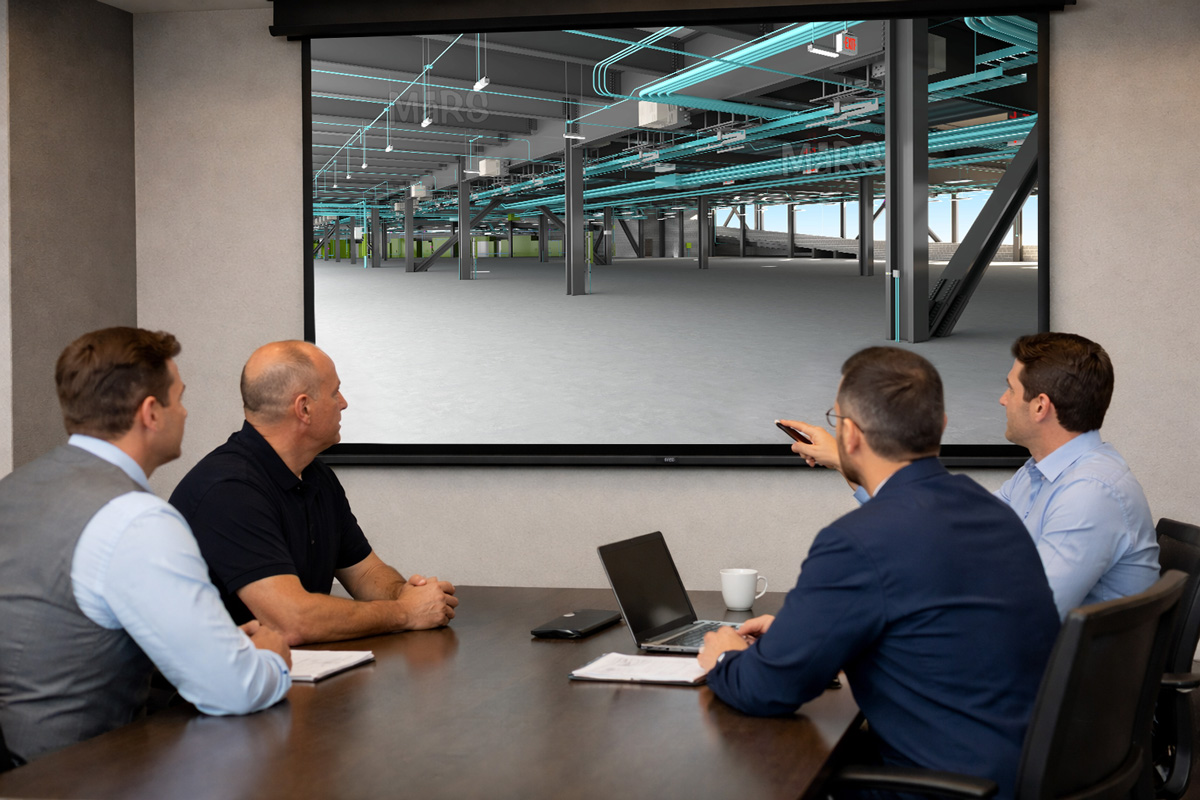
MaRS BIM Solutions’ team actively participates alongside the general contractor and project stakeholders to review the federated BIM model, analyze clashes, and agree on solutions. Instead of simply presenting a clash list, the MaRS BIM team walks through each issue and explains potential impacts, ensuring that mechanical, electrical, and plumbing trades understand priorities and dependencies. This collaborative approach fosters alignment between design intent and field execution, and allows prompt decisions on routing adjustments, clearance resolutions, and documentation updates.
MaRS BIM Solutions also prepares meeting minutes, assigns action items, and updates the BIM Execution Plan based on real-time coordination feedback, which helps keep the project on schedule and minimizes surprises during installation.
6. Model Updates and Revisions
After meetings, each trade updates their models. Revised models are rechecked for clashes.
This cycle continues until the model reaches a clash free or clash minimized stage suitable for construction.
This structured BIM coordination services NYC workflow ensures that field conflicts are minimized before installation begins.
7. Final Coordinated Model Delivery
Once coordination is complete, MaRS BIM Solutions delivers:
- Final federated coordination model
- Updated trade specific models
- Clash reports with resolution status
- Coordination meeting minutes
- Model review documentation
The coordinated model supports fabrication, installation, and inspection processes.
Tools and Technology Used in the Workflow
The efficiency of BIM modeling services NYC depends on the right tools.
MaRS BIM Solutions uses:
- Autodesk Revit for modeling and updates
- Autodesk Navisworks Manage for clash detection
- BIM 360 / Autodesk Construction Cloud for collaboration
- Point cloud to BIM tools when working with renovation projects
In addition to standard BIM software, MaRS BIM Solutions has developed tools to simplify BIM data tasks. One of these is the MaRS Schedule Manager Revit Plugin, which lets teams export data from a Revit model to Excel for bulk edits and then sync those changes back into the model quickly and safely. This two-way Excel sync eliminates repetitive manual work, standardizes data using saved presets, and helps maintain clean, structured BIM schedules and parameter information before changes impact the model. The tool supports categories, schedules, family lists, and linked file references, giving teams full visibility and control over model data.
Case Study: Wegmans BIM Project
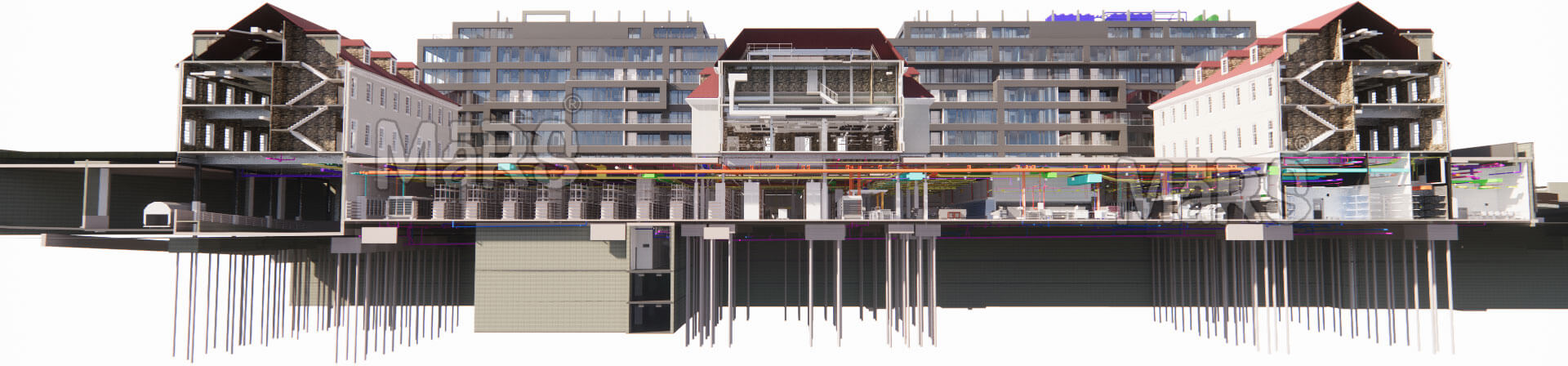
Site Area: 9.71 Acres
Building Type: Retail Store
Scope: Full MEP coordination
LOD: LOD 400
In this project, MaRS BIM Solutions developed detailed LOD 400 MEP models covering HVAC, refrigeration, plumbing, and electrical systems. These models enabled accurate clash detection and spatial coordination in a congested mechanical environment. The team resolved 15,867 clashes using Navisworks clash detection and coordinated with contractors and engineers through regular model reviews. MaRS also produced detailed shop drawings that guided installation work on site. Using Autodesk Construction Cloud, MaRS managed over 1,200 documents and kept revisions up-to-date, improving installation accuracy, reducing construction errors, and saving material waste.
Check more details here: https://www.marsbim.com/projects/wegmans-mep-bim-project/
Why NYC Contractors Prefer Structured BIM Coordination?
NYC general contractors prefer organized coordination processes because they provide:
- Clear clash tracking logs
- Documented decision history
- Meeting minutes for accountability
- Version controlled models
- Transparent reporting
When working under NYC Building Code compliance, documentation becomes just as important as modeling accuracy.
Contractors can review NYC code requirements directly from the NYC Department of Buildings website.
How This Workflow Helps NYC General Contractors?
A structured BIM coordination workflow offers clear advantages:
- Reduced Site Rework: Clashes are resolved digitally instead of on site.
- Fewer RFIs: Coordination questions are addressed during model review stages.
- Better Cost Control: Avoiding field conflicts prevents unexpected labor and material costs.
- Faster Project Timelines: Well coordinated models speed up approvals and installations.
- Improved Communication: All trades work within the same 3D environment, reducing misunderstandings.
In NYC high rise and commercial projects, where space is limited and scheduling is tight, this process significantly reduces risk.
Frequently Asked Questions
Q: Who provides BIM coordination services for general contractors in NYC?
A: BIM coordination services for NYC general contractors are provided by specialized BIM teams such as MaRS BIM Solutions. MaRS has dedicated BIM coordinators and modelers who create multi-discipline Revit models, run clash detection using tools like Navisworks, and support structured coordination cycles with clear, construction-ready outputs. The team understands local project complexities and works directly with contractors to deliver coordinated models that help reduce on-site clashes and support installation sequences.
Q: What is the process of BIM coordination meetings?
A: The BIM coordination meeting process at MaRS BIM Solutions begins by preparing the latest federated BIM model, including architectural, structural, and MEP systems. Clash reports are generated and categorized by severity. During meetings, the MaRS team uses visual views from Navisworks and Revit to show where conflicts occur, explains their impact, and recommends how to resolve them. Decisions on fixes are agreed upon by trade partners, and responsibilities are tracked. After the meeting, updated models and revised clash reports are shared with all stakeholders.
Q: How often are BIM coordination meetings held for NYC construction projects?
A: BIM coordination meetings for NYC construction projects are typically held weekly or every two weeks, depending on project complexity and milestone needs. Frequent cycles help catch new clashes early and ensure changes from designers or contractors are integrated into the coordinated model before field installation begins.
Q: What should be prepared before a BIM coordination meeting?
A: Before a coordination meeting, the latest trade models from Revit must be integrated into a federated model, clash detection should be run in Navisworks, and categorized clash logs should be ready. Model screenshots, relevant section views, and priority lists help meeting participants clearly understand issues and possible solutions. Preparing these elements improves focus and supports quicker decision making during the meeting.
Q: How does BIM coordination with MaRS BIM Solutions improve field installation?
A: Working with MaRS BIM Solutions improves field installation by removing spatial conflicts before construction begins. By identifying and resolving clashes early, models support accurate shop drawings, better material planning, and reduced rework on site. The coordinated BIM data also supports fabrication, installation sequencing, and field validation, making installation smoother and faster.
Conclusion
NYC construction projects demand precision, coordination, and strong communication between trades. A structured BIM Coordination Workflow helps general contractors reduce risk, improve cost control, and maintain project timelines.
MaRS BIM Solutions follows a clear and systematic BIM coordination services NYC process designed specifically for high complexity projects in New York. From model integration to clash detection and final delivery, each step is focused on practical construction outcomes.
If you are a NYC general contractor looking to improve project coordination and reduce field conflicts, connect with MaRS BIM Solutions today.
Schedule a BIM coordination consultation and receive a detailed clash detection assessment for your upcoming project.
Let your next NYC construction project move forward with confidence and clarity.