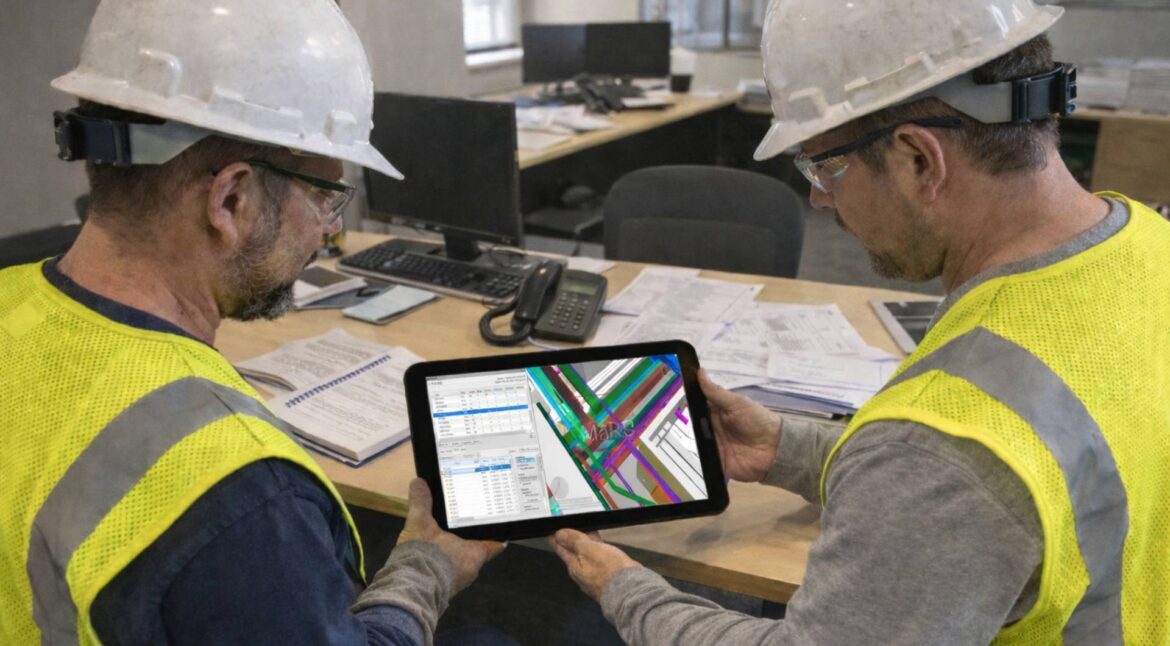
The US construction industry loses an estimated $177 billion annually to rework and inefficiency, with trade contractors absorbing a disproportionate share of that loss. Mechanical, electrical, and plumbing crews are most vulnerable: they install last, they have the least spatial flexibility, and when something doesn’t fit, they pay for the fix, even when the conflict wasn’t their fault.
Traditional 2D coordination depends on every discipline’s drawings being accurate, updated, and cross-referenced manually. On a project with dozens of drawing sets, that process fails constantly. A structural engineer updates a beam elevation; the change never reaches the mechanical contractor; the duct run is fabricated to old dimensions. When that duct arrives on site, it’s scrap.
BIM clash detection is the process of running automated interference checks across federated 3D models from all trades. It identifies these conflicts digitally, weeks or even months before crews mobilize. For trade contractors, it’s one of the highest-ROI tools available in modern construction technology.
What Is BIM Clash Detection, Exactly?
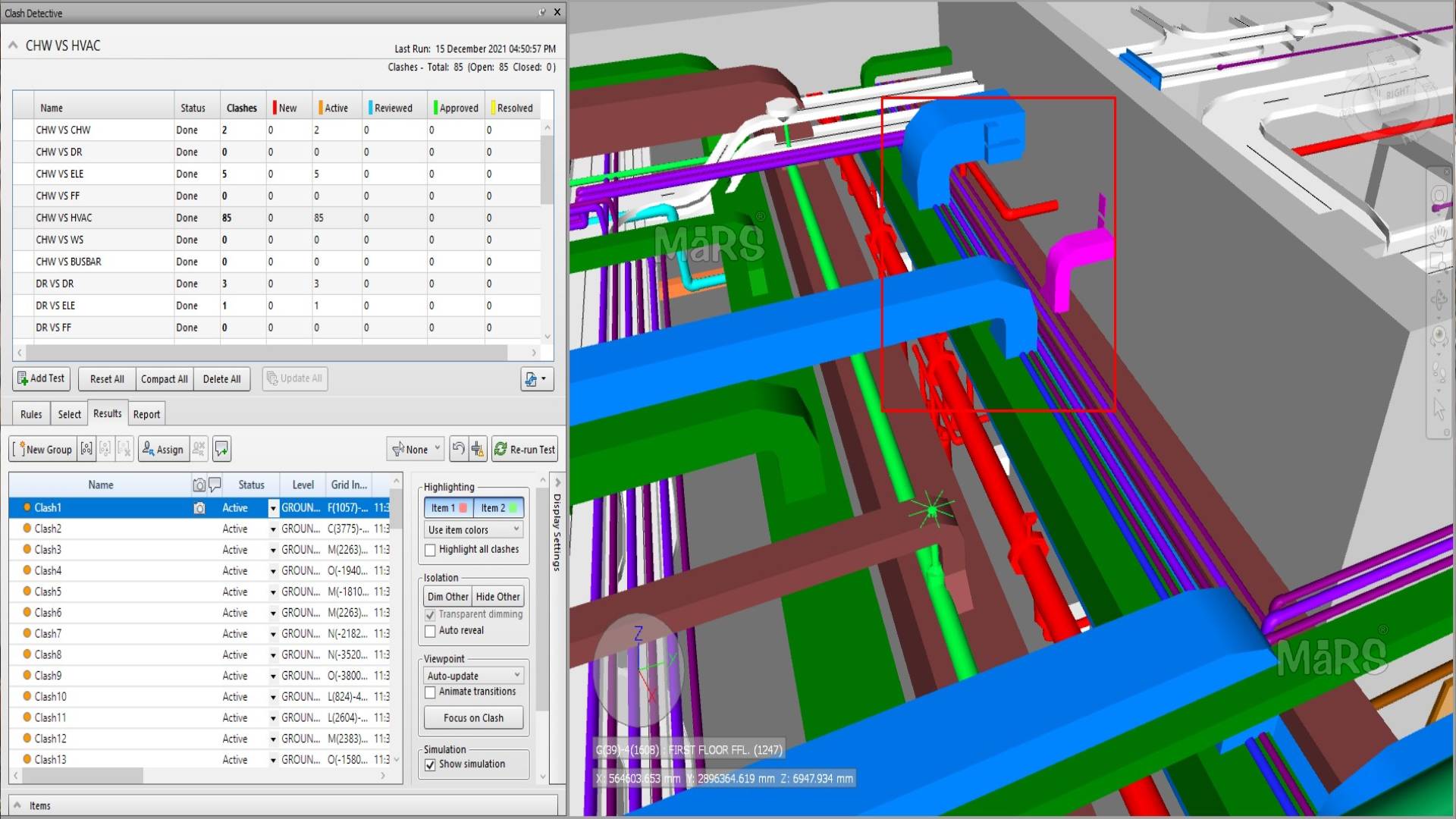
BIM clash detection is the process of combining discipline-specific Building Information Models such as structural, architectural, mechanical, electrical, plumbing, and fire protection into a single federated model. Once integrated, software-based interference tests are performed to identify where elements from different systems physically overlap or fail to meet required clearance standards.
The three primary clash types that affect trade contractors are:
Hard Clashes
Two objects occupying the same physical space. A classic example: a fire protection pipe routed through a structural column. These are non-negotiable conflicts that must be resolved before installation begins.
Soft Clashes (Clearance Conflicts)
Elements that don’t physically intersect but violate code-mandated or maintenance clearance requirements. An electrical panel with inadequate front clearance, or a fan coil unit positioned too close to a wall for filter access, are both soft clashes. They’re frequently missed on 2D drawings and create expensive accessibility problems post-occupancy.
Workflow or 4D Clashes
Sequencing conflicts occur when two crews are scheduled to work in the same zone at the same time. They also arise when one trade’s installation needs to be completed before another begins, but the project schedule does not reflect that dependency. These are especially damaging on fast-track or Design-Build projects. 4D BIM scheduling addresses these directly by linking model elements to project timelines.
How the BIM Clash Detection Process Works

The process is methodical and iterative. Here’s how it plays out on a typical US commercial or healthcare project:
Step 1: Model Aggregation
Each discipline’s Revit or design model is exported in a standard format, typically NWC or IFC. These files are then combined within clash detection software, most commonly Autodesk Navisworks.
Step 2: Clash Rules Configuration
A BIM coordinator configures the clash tests: which discipline pairs to check, what clearance tolerances apply, and which clashes to suppress (known, accepted conflicts). Rule configuration requires both technical BIM expertise and practical field experience. Generic tolerance settings often generate thousands of false positives, which can overwhelm coordination teams.
Step 3: Clash Report Generation and Triage
The software generates a clash report, often containing hundreds or thousands of flagged conflicts on complex projects. A skilled MEP coordination team triages these by severity, trade responsibility, and resolution complexity. Not every flag requires immediate action; prioritization is critical.
Step 4: Coordination Meetings and Resolution
Trade contractors, the GC, and the design team convene in coordination meetings, often held weekly during pre-construction, to assign ownership and resolve conflicts. BIM allows each clash to be visualized in 3D, eliminating the interpretation errors that plague 2D conflict discussions.
Step 5: Model Updates and Re-Check
After clashes are resolved, models are updated and re-run through the clash detection engine. The cycle continues until the federated model achieves coordination sign-off, which typically requires the clash count to fall below a project-specific threshold agreed upon in the BIM Execution Plan (BEP).
The goal is not to achieve a zero-clash model. The goal is to deliver a coordinated model where every remaining conflict is documented and accepted, not a surprise hidden in the ceiling.
BIM for Mechanical Contractors: Where the Savings Are Largest
For mechanical contractors, BIM clash detection delivers its most dramatic returns in ductwork and piping coordination. HVAC systems are spatially complex. Main trunk lines must pass through structural bays, transition through floor penetrations, and maintain code-required clearances around fire-rated assemblies. At the same time, they must remain above the ceiling plane specified by the architect.
BIM for mechanical contractors means those routing decisions happen in the model, not on the jobsite. Without coordination, prefabrication is a gamble. With it, shop fabrication can begin weeks before steel is topped out, compressing schedule and reducing field labor hours significantly.
Mechanical BIM also captures equipment clearances that 2D drawings routinely miss: the service corridor behind an AHU, the required overhead clearance for coil pull, the pipe rack loading that affects structural steel sizing. These details, embedded in a coordinated mechanical BIM model, prevent the kind of conflicts that result in equipment being installed, then removed, then reinstalled.
BIM for Electrical Contractors: Routing, Raceways, and Risk
Electrical systems are dense and often remain hidden in traditional drawings. Conduit runs, cable tray networks, junction box locations, and panel room layouts typically do not receive adequate spatial coordination. As a result, conflicts are often discovered only after a duct or pipe has already occupied the required space.
BIM for electrical contractors changes that dynamic. Cable tray systems, modeled in three dimensions and coordinated against structural elements and other MEP systems, can be optimized for both code compliance and installation efficiency before a single anchor is drilled. Electrical rooms, often afterthoughts in schematic design, are modeled to verify that switchgear clearances, transformer placement, and conduit routing are actually achievable in the given footprint.
Panel schedules and circuit routing embedded in the BIM also support downstream deliverables: accurate material take-offs, prefabricated conduit sections, and as-built documentation at project close-out. Our electrical modeling and coordination services are specifically structured to support US electrical contractors from coordination through closeout.
The Coordination Advantage for Plumbing and Fire Protection
Plumbing and fire suppression systems share a coordination challenge that electrical doesn’t gravity. Drain lines must slope consistently to maintain drainage capacity, which means their elevation changes predictably over long horizontal runs and those runs frequently conflict with mechanical ductwork, electrical cable trays, and structural beams.
BIM clash detection identifies these elevation conflicts precisely. A plumbing BIM coordinator can model drain slope as a function, not just a static element, and run clashes against all overhead obstructions to find the one 8-inch section where a concrete beam drops the available plenum below the required drainage elevation. That problem, caught in the model, requires a beam penetration or routing change. Found on site, it requires demolition.
Fire protection sprinkler coordination is similarly high-stakes, particularly in occupied facilities or phased construction where temporary protection systems must remain active during installation. BIM for fire safety coordinates sprinkler head placement, coverage zones, and hydraulic calculations within the spatial constraints of the coordinated model.
MEP Coordination Services: What to Expect from a BIM Partner
Not all MEP Coordination Services are equivalent. Trade contractors evaluating BIM coordination partners should look for three core capabilities: model authoring skill (the ability to build accurate, field-realistic models, not just abstract geometry), clash triage expertise (the judgment to distinguish critical clashes from noise), and communication infrastructure (the ability to produce clash reports, resolution logs, and updated models on a cadence that keeps coordination meetings productive).
The MEP BIM services that generate real field value are those where the coordinator understands installation sequence, prefabrication requirements, and trade jurisdiction, not just software operation. A clash detection report produced by someone who has never been on a jobsite often flags conflicts that aren’t conflicts, and misses nuances that an experienced installer would catch immediately.
Leading coordination workflows also integrate with MEP shop drawing production, ensuring that the coordinated model becomes the direct basis for fabrication, not just a reference document. This eliminates the re-drafting step where coordination errors are typically reintroduced.
BIM Clash Detection and Prefabrication: A Multiplier Effect
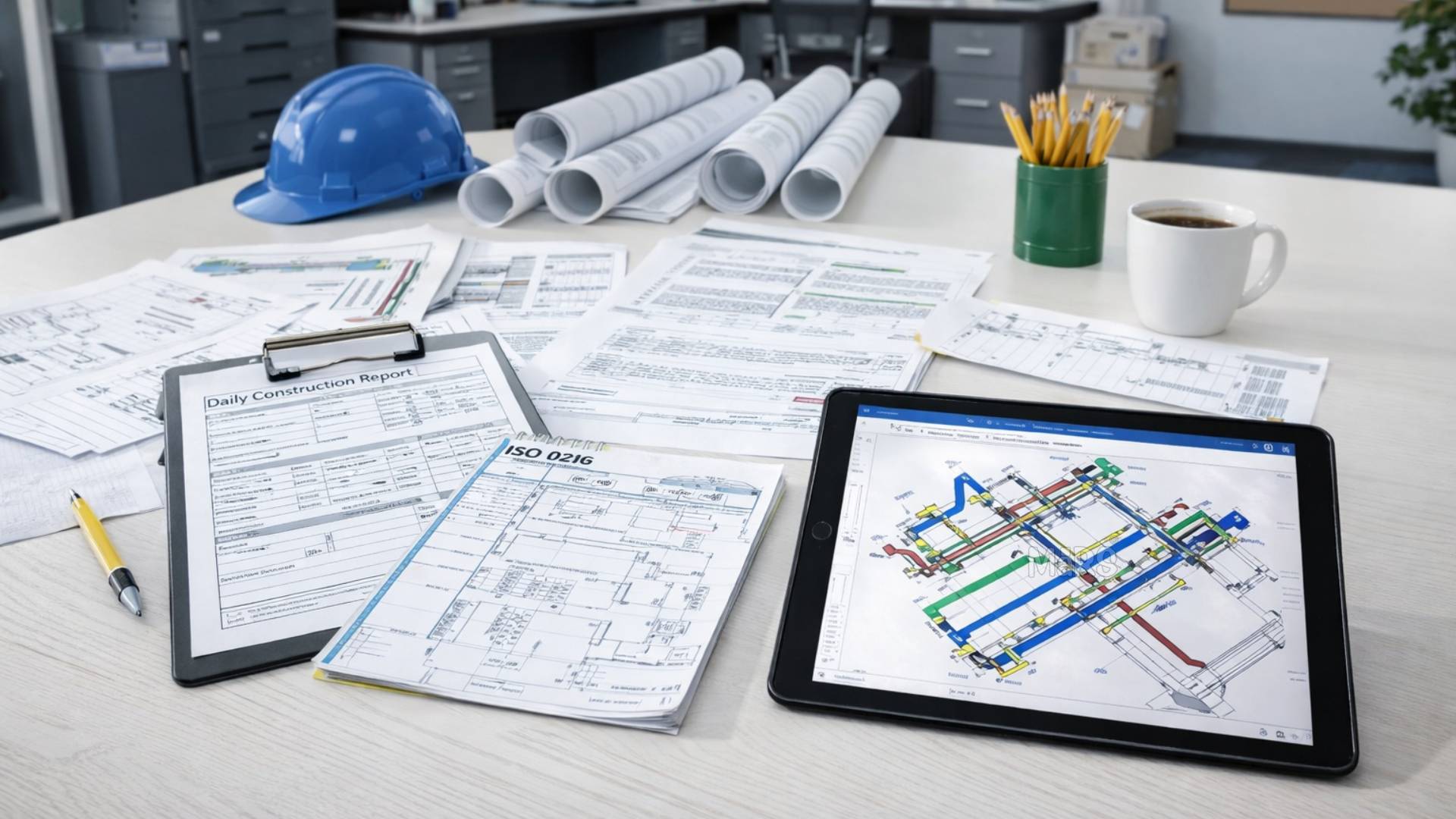
Prefabrication is rapidly becoming standard practice for US trade contractors, not just for mechanical and plumbing, but for electrical conduit assemblies, pipe rack modules, and even complex structural connections. But prefabrication is only as good as its dimensional inputs. If those inputs come from a coordinated BIM, the assemblies arrive on site and install cleanly. If they come from uncoordinated 2D drawings, the assemblies arrive and don’t fit.
This is where BIM clash detection functions as a multiplier. It doesn’t just prevent one rework event, it enables an entire prefabrication strategy that can reduce field labor by 20 to 35 percent on MEP-intensive projects. The coordination work is concentrated in the pre-construction phase, where design changes are cheap. The benefit is captured throughout construction, where they’re expensive.
Our prefabricated MEP drawing services are built around this principle: coordinated models feed directly into spool drawings and assembly sheets, ensuring that the coordination investment translates into tangible fabrication efficiency.
Practical Implementation: Getting Started as a Trade Contractor
For trade contractors who haven’t yet integrated BIM clash detection into their workflow, the most common barrier is perceived complexity. The reality is that most trade contractors don’t need to operate BIM software themselves, they need a coordination partner who can process their installation drawings, model their systems, and deliver a clash-free installation drawing set with shop drawing support.
The practical starting point is the BIM Execution Plan. Every major project should have one, and trade contractors should understand what it requires of them: model delivery formats, LOD (Level of Development) requirements, coordination meeting schedules, and clash acceptance thresholds. If the GC or owner hasn’t produced a BEP, that’s a red flag worth raising early.
From there, the most impactful first step is engaging clash detection and coordination services on a single project where rework history or scope complexity suggests high coordination risk. The results are measured in reduced RFIs, fewer field conflicts, and cleaner installations. These outcomes typically make the business case for every subsequent project.
For trade contractors operating in the healthcare, data center, or commercial high-rise sectors, clash detection isn’t optional. Industry data consistently shows that projects using coordinated BIM resolve 80 to 90 percent of major conflicts before construction begins. This approach shifts construction from a reactive problem-solving process to a predictable and profitable operation.
Conclusion
For BIM for trade contractors, the value proposition is direct: every dollar spent on pre-construction BIM coordination returns five to ten dollars in avoided rework, schedule recovery, and labor efficiency. In a margin-compressed industry where a single bad project can erase a year of profitability, that math is hard to ignore.
BIM clash detection is not a technology experiment. It is a mature and proven workflow that is used on thousands of construction projects across the United States every year. Trade contractors who integrate it into their pre-construction process protect their schedules, their crews, and their bottom lines. Those who don’t absorb the cost of every conflict that could have been caught in a model.