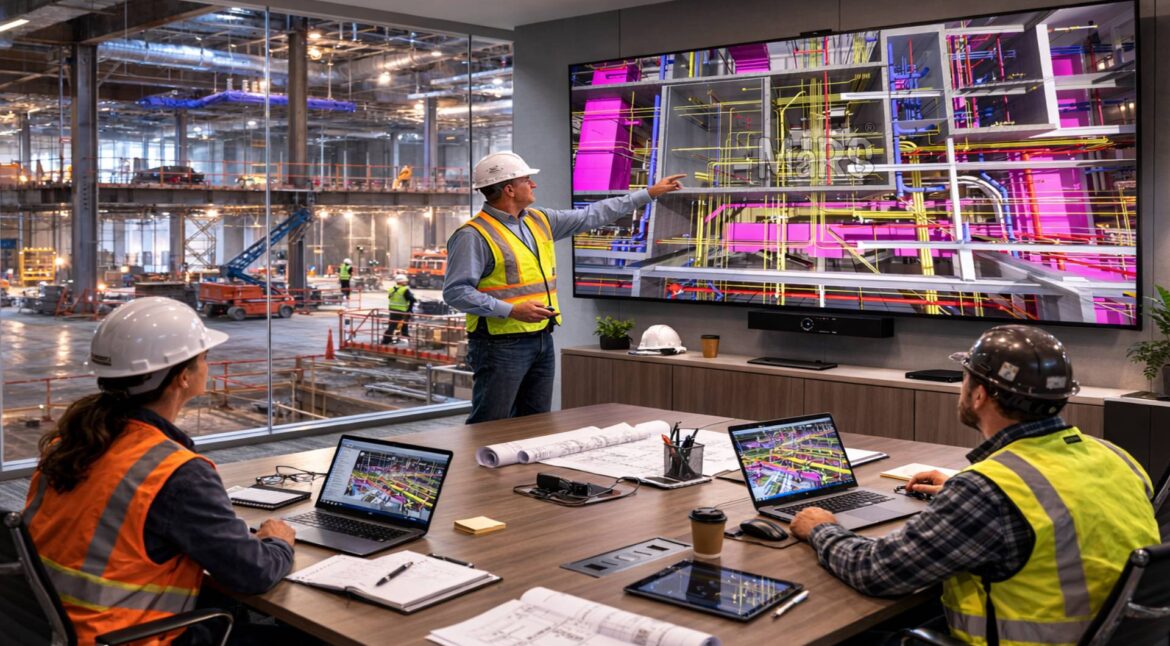
The modern construction environment in the United States is more complex than ever. General Contractors manage multiple trade partners, tight schedules, strict building codes, and increasing client expectations. Mechanical, electrical, plumbing, fire protection, structural steel, facade, and interior trades must all work within the same physical space. Without structured coordination, conflicts are inevitable.
This is where BIM Coordination for General Contractors becomes essential.
Building Information Modeling allows General Contractors to align subcontractors in a shared digital environment before work begins on site. When properly implemented, BIM reduces clashes, improves scheduling accuracy, and strengthens cost control across the entire project lifecycle.
This article explains how General Contractors use BIM to coordinate multiple subcontractors across U.S. projects, from preconstruction through field execution.
Understanding the Coordination Challenge in U.S. Construction
On most commercial projects in the United States, a General Contractor may manage:
- Mechanical subcontractors
- Electrical subcontractors
- Plumbing subcontractors
- Fire protection contractors
- Structural steel fabricators
- Curtain wall installers
- Specialty trade contractors
Each trade produces its own shop drawings and layout plans. Traditionally, coordination occurred using 2D overlays. Conflicts were often discovered during installation, leading to RFIs, change orders, delays, and cost overruns.
In high-density projects such as healthcare facilities, data centers, high-rise buildings, and large commercial developments, these risks multiply.
BIM Coordination for Trade Contractors/Subcontractors shifts this process upstream. Instead of resolving conflicts in the field, General Contractors coordinate models in a virtual environment before fabrication and installation begin.
What BIM Means for General Contractors
For General Contractors, BIM is not just 3D modeling. It is a structured coordination and collaboration framework that includes:
- Federated model integration
- Clash detection and resolution
- 4D construction sequencing
- Model-based quantity validation
- Digital coordination meetings
- Field layout support
- Model-based documentation
By implementing BIM strategically, the General Contractor becomes the central coordinator of trade models.
The BIM Coordination Workflow Used by General Contractors
1. Model Collection from Subcontractors
Each trade contractor develops its discipline-specific model. For example:
- Mechanical contractor models ductwork and equipment
- Electrical contractor models cable trays, panels, and conduits
- Plumbing contractor models piping systems
- Fire protection contractor models sprinkler lines
Some trades may already have in-house modeling teams. Others rely on BIM Services for Trade Contractors to develop accurate fabrication-level models.
The General Contractor establishes modeling standards, Level of Development requirements, file naming conventions, and submission timelines.
2. Creation of the Federated Model
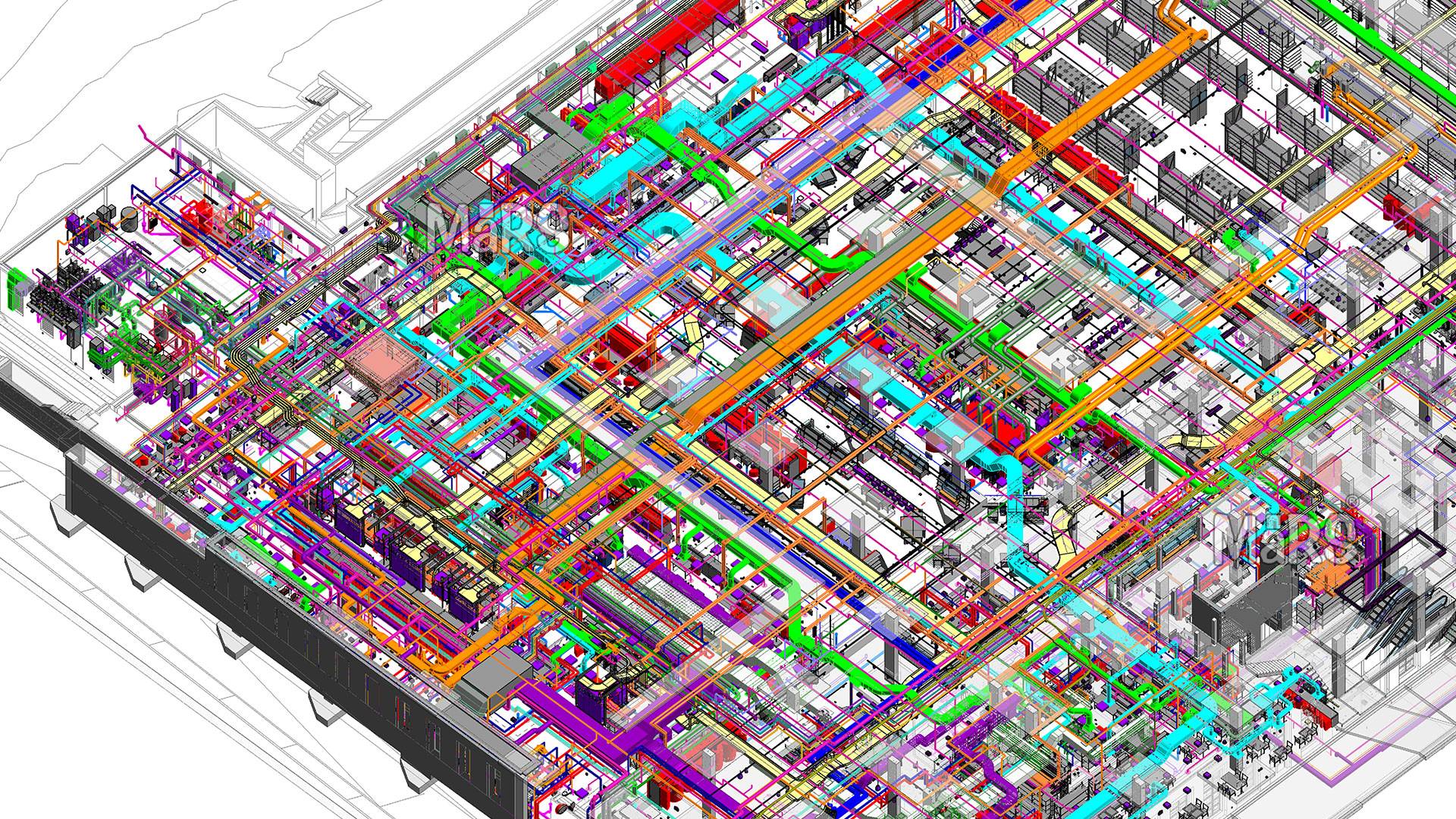
The GC combines all trade models into a single federated model using coordination platforms such as:
- Autodesk Navisworks
- Autodesk Revit
- Autodesk Construction Cloud
The federated model allows the GC to visualize spatial relationships between trades in a single coordinated environment.
This becomes the digital coordination hub of the project.
3. Clash Detection and Conflict Analysis
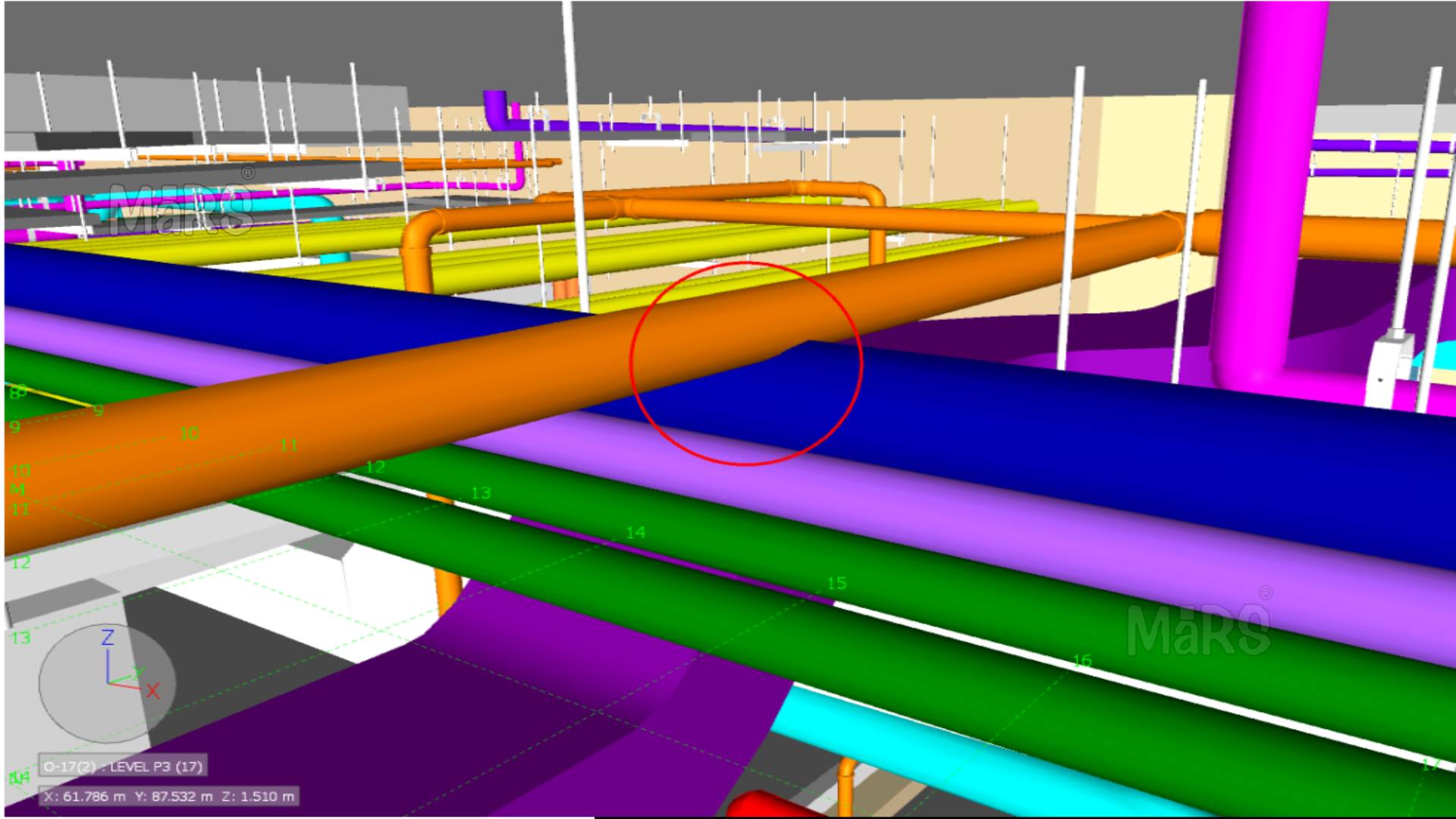
Clash detection identifies physical conflicts between systems, such as:
- Duct intersecting structural beams
- Conduit crossing plumbing lines
- Sprinkler heads conflicting with ceiling elements
- Equipment access clearance violations
General Contractors run systematic clash tests between disciplines. Instead of manually reviewing drawings, software identifies hard clashes, soft clashes, and clearance issues.
Clashes are grouped, assigned to responsible trades, and tracked until resolution.
This structured process is the backbone of BIM Coordination for General Contractors.
4. Coordination Meetings with Trade Contractors
Weekly or biweekly coordination meetings are conducted with subcontractors.
During these sessions:
- Clash reports are reviewed
- Trade priorities are established
- Routing adjustments are discussed
- Constructability issues are resolved
- Fabrication readiness is confirmed
The General Contractor leads these meetings, ensuring accountability and alignment with the project schedule.
Clear communication is critical. BIM reduces arguments because decisions are based on visual evidence within the model.
5. Model Updates and Iteration
After meetings, each subcontractor updates its model based on agreed solutions. Revised models are re-submitted and re-tested.
This loop continues until clashes are reduced to an acceptable threshold.
The result is a coordinated model that reflects actual installation intent.
6. Integration with Construction Schedule (4D BIM)
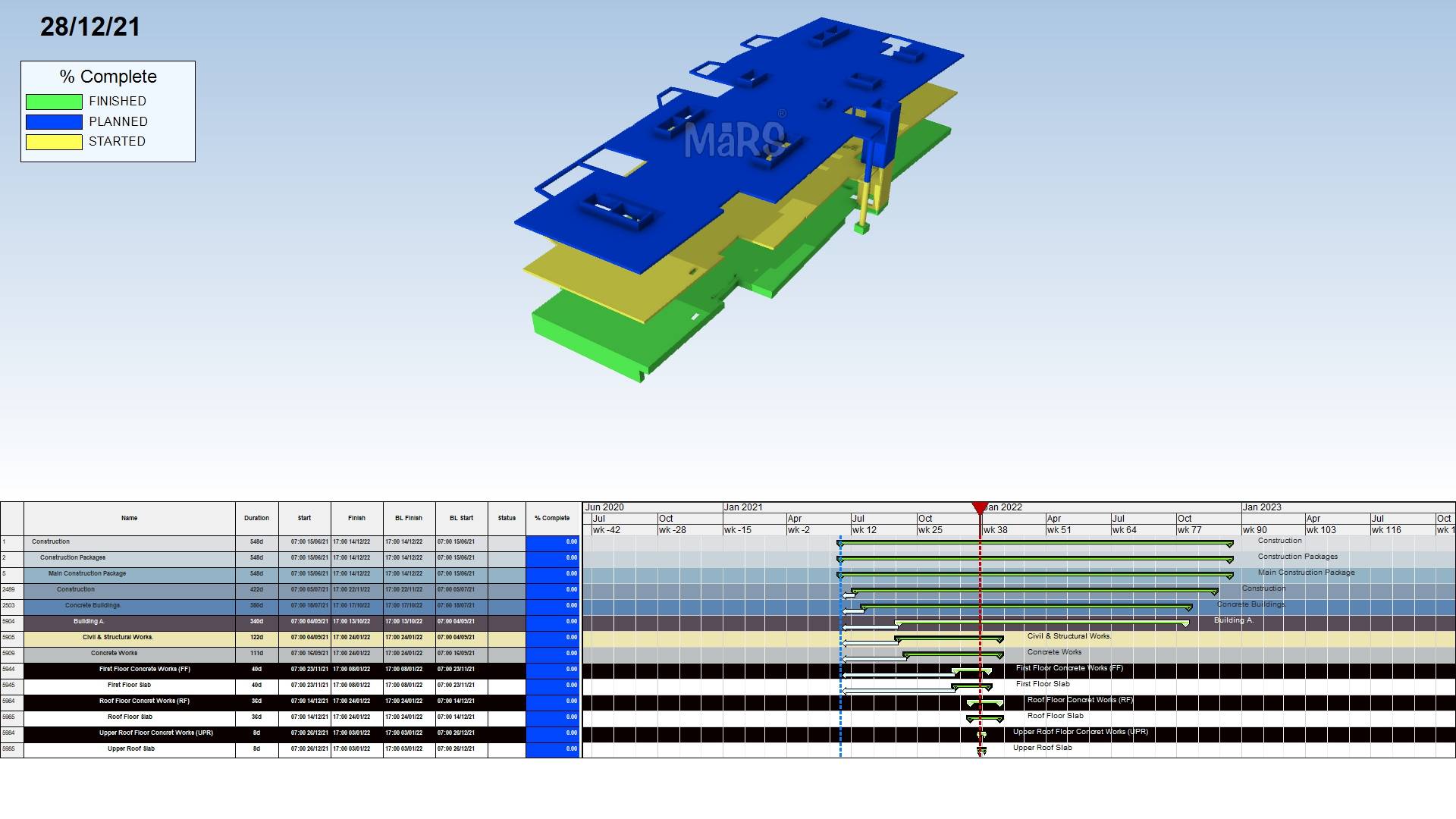
Advanced General Contractors integrate the coordinated model with the construction schedule.
This 4D BIM process links model elements to activities in scheduling platforms.
Benefits include:
- Visual sequencing validation
- Detection of trade stacking issues
- Identification of access constraints
- Improved site logistics planning
By visualizing installation order, GCs prevent congestion between subcontractors working in the same zone.
7. Field Execution and Layout Support
Once coordination is complete, the model supports field teams.
Applications include:
- Model-based layout using total stations
- Sleeve and insert placement verification
- Installation tracking
- As-built documentation
When BIM for Subcontractors is properly aligned with GC coordination, field errors are significantly reduced.
Why Contractor-Focused BIM Is Different?
Architectural BIM and contractor-focused BIM are not the same.
Architectural models are typically design intent models. They may not include fabrication-level detail or field tolerances.
General Contractors require:
- Accurate elevations
- Precise hanger locations
- Access clearances
- Installation sequencing logic
- Realistic constructability validation
This is why BIM Services for Trade Contractors often focus on LOD 350 to LOD 400 modeling, which supports fabrication and installation.
GC-led coordination ensures models are buildable, not just visually accurate.
How BIM Improves Collaboration Between Trades?
Subcontractors often work independently. BIM creates a shared coordination environment where:
- Routing decisions are collaborative
- Priority systems are established early
- Equipment zones are defined clearly
- Ceiling congestion is minimized
When General Contractors implement structured BIM Coordination for Trade Contractors/Subcontractors, the project shifts from reactive problem solving to proactive planning.
This collaborative approach is especially critical in U.S. healthcare, life sciences, data center, and high-rise construction.
The Strategic Value of BIM for U.S. General Contractors
The U.S. construction industry continues to adopt digital workflows. Owners increasingly expect model deliverables. Public and private projects demand higher coordination standards.
General Contractors who master BIM Coordination for General Contractors gain competitive advantages:
- Stronger preconstruction capabilities
- More reliable bids
- Lower risk exposure
- Improved subcontractor relationships
- Higher client confidence
BIM is no longer optional on complex projects. It is a core management tool that allows General Contractors to orchestrate multiple subcontractors efficiently within constrained spaces and schedules.
Case Study: WMATA Northern Bus Garage (Washington, D.C.)
One compelling example of BIM Coordination for General Contractors in action is the reconstruction of the WMATA Northern Bus Garage, a major transit infrastructure project in the United States. Located on 14th Street NW in Washington, D.C., this facility is being rebuilt into a modern bus operations and maintenance center designed to support an all-zero-emission fleet and advanced transit operations. The project is expected to be completed in 2027.
Project Overview
The Northern Bus Garage Reconstruction Project replaces the century-old facility with a three-story structure featuring maintenance bays, administrative space, and infrastructure to support up to 150 zero-emission buses as part of Metro’s transition away from fossil fuels. The project also preserves portions of the historic façade and targets LEED Platinum certification for sustainability.
This large-scale, multidiscipline build requires close collaboration among structural, mechanical, electrical, plumbing, fire protection, and specialty trades — an ideal environment for robust BIM coordination. MaRS BIM Solutions served as a key BIM partner for the project’s General Contractor, contributing essential BIM Coordination for Trade Contractors/Subcontractors throughout the design and construction processes.
How BIM Was Used on the Project?
Scan to BIM and As-Built Modeling
Before reconstruction, detailed Scan to BIM processes captured the existing bus garage conditions using advanced laser scanning. This created precise 3D as-built models that served as the foundation for clash detection and coordination among all trades.
Federated Model and Clash Detection
MaRS BIM Solutions helped assemble a federated model that combined individual trade contractor models into a unified digital environment. Coordination software was used to detect conflicts between mechanical ductwork, electrical systems, plumbing, and structural elements early in the project, long before physical installation. These virtual clash analyses prevented costly field rework and minimized scheduling impacts.
Coordination Meetings and Iteration
The General Contractor, along with trade partners, conducted regular model review sessions where clashes were discussed and resolved collaboratively. MaRS BIM Solutions supported these sessions by tracking issues, assigning responsibilities, and validating solutions against project standards.
Supporting Fabrication and Prefabrication
Coordinated BIM models were detailed to support fabrication workflows for major building systems. This enabled trade contractors to develop accurate shop drawings and prefabricated assemblies, improving speed and quality during installation.
Impact of BIM Coordination on the Northern Bus Garage
Reduced On-Site Conflicts
By resolving design clashes virtually, the project avoided many of the common field issues typical to large transit facilities. This increased installation efficiency for subcontractors and reduced downtime.
Improved Trade Collaboration
With a federated model serving as a single source of truth, all disciplines worked from consistent and up-to-date information. This improved communication between mechanical, electrical, structural, and specialty trades.
Enhanced Schedule and Cost Reliability
BIM coordination aligned subcontractor schedules with fabrication and delivery milestones, improving overall project predictability. Early identification of conflicts and constructability issues helped keep the reconstruction program on track.
Stronger Quality and Documentation
As-built information and coordinated deliverables generated through BIM provided a reliable foundation for future facility operations and maintenance, supporting long-term asset management.
Why This Example Matters?
The Northern Bus Garage project demonstrates how BIM for Subcontractors and coordinated digital workflows elevate project delivery in complex urban infrastructure. Transit facilities like this involve dense systems and require precise alignment between trades. BIM coordination led by an experienced partner such as MaRS BIM Solutions enables General Contractors to:
- Maintain tight control over multidiscipline collaboration
- Improve constructability before work begins on site
- Support advanced fabrication methods
- Deliver a facility aligned with sustainability and operational goals
This case highlights the transformative role of BIM in modern U.S. construction, particularly on technically challenging and sustainability-driven public projects.
Conclusion
Coordinating multiple subcontractors has always been one of the most challenging responsibilities of a General Contractor. BIM transforms this challenge into a structured, data-driven process.
Through federated modeling, clash detection, trade collaboration, schedule integration, and field application, General Contractors can significantly reduce risk and improve project performance.
When implemented correctly, BIM Coordination for General Contractors becomes the foundation for efficient multi-trade collaboration across U.S. construction projects.