
BIM Services In New York
MaRS BIM Solutions provides end-to-end BIM services for New York City’s most complex construction projects, delivering precise MEP coordination, clash detection, 4D sequencing, and LOD 500 as-built models in full compliance with NYC DOB, Local Law 97, and LPC requirements, so your project stays coordinated, compliant, and on schedule from groundbreaking to handover.
BIM Services for Architects and Contractors in New York
The construction industry in New York handles complex buildings and tight project schedules. Project teams use BIM to plan and manage construction with better accuracy. BIM helps architects engineers and contractors work on a shared 3D model of the building. MaRS BIM Solutions provides BIM services in New York to support design teams and contractors with clear digital models for construction planning.
Our team creates detailed 3D BIM models using Autodesk Revit for architectural structural and MEP systems. The BIM model shows walls columns beams ducts pipes and cable trays with exact dimensions. Designers and contractors use the model to review system layouts and construction details. Accurate BIM modeling helps teams understand the building before work starts on site.
We also deliver BIM coordination and clash detection services for construction teams in New York. Our engineers combine models from each discipline into one coordinated model. The team checks the model in Autodesk Navisworks to detect clashes between ducts pipes beams and cable trays. This process helps contractors solve design conflicts early and avoid rework during construction.
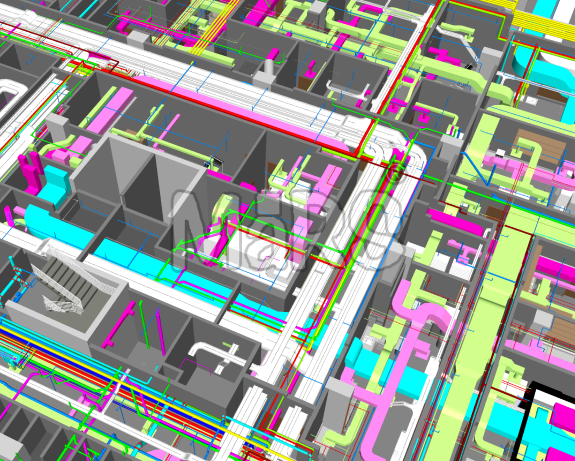
Our BIM Modeling Case Studies from New York Projects

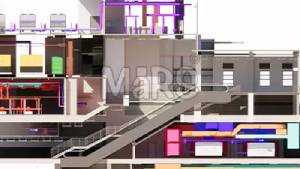
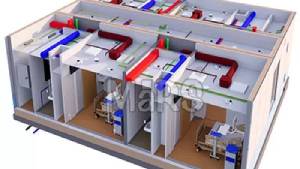
Our BIM Software Proficiency











Customized BIM Softwares
Customized Revit Plugins
& Many More
Our BIM Services Includes:
MaRS BIM Solutions provides a wide range of BIM services to support architects engineers and contractors working on construction projects in New York. Our team develops accurate BIM models and coordinated building systems that help project teams plan and manage construction work. We use industry standard tools such as Autodesk Revit and Autodesk Navisworks to create detailed models and perform coordination checks. Our BIM services help teams improve design coordination reduce clashes and support smooth construction execution.
- 3D BIM Modeling
- Architectural BIM Modeling
- Structural BIM Modeling
- MEP BIM Modeling
- BIM Coordination
- Clash Detection
- Revit BIM Modeling
- Shop Drawing Production
- Scan to BIM Services
- Quantity Takeoffs
- Construction Planning
- As Built BIM Modeling
- LOD 100 to LOD 500
- Audit and Quality Check
- Updates and Revisions
- Point Cloud to BIM
What Makes MaRS the Top BIM Company in New York?
New York BIM Standards
MEP Trade Coordination
Fabrication Shop Drawings
Dedicated BIM Support
BIM Adoption and impact in New York construction industry
- https://www.designheed.com/construction-trends-in-new-york-and-the-impact-of-bim/
- https://www.planradar.com/us/bim-in-the-us/
- https://strand-co.com/blogs/how-bim-consulting-reduces-project-costs/
- https://www.gsourcedata.com/case-studies/precise-lod-400-bim-and-coordination-for-a-1-4-million-sq-ft-high-rise/
Why Choose MaRS for BIM Services in New York?
Experienced BIM Professionals
Clash Free Model Delivery
Construction Ready BIM Models
Reliable BIM Project Support
20 +
Years Experience
850 +
happy customer
1800 +
Projects Completed
265 +
Qualified Employees
BIM FAQs
We follow the AIA E202 BIM Protocol and BIMForum LOD Specification 2023 for all NYC projects. Our deliverables range from LOD 100 (conceptual massing) through LOD 500 (as-built/facility management). For NYC DOB submissions, we adhere to NYC Department of Buildings BIM guidelines and coordinate with ePlans for electronic submissions. LOD 300 is our standard for construction documentation, while MEP coordination typically requires LOD 350 to resolve clash-critical interfaces. LOD 400 fabrication models are produced in collaboration with trade contractors for complex structural steel, precast concrete, and curtain wall systems common in New York high-rise construction.
Our primary authoring platform is Autodesk Revit (latest two versions maintained), supplemented by Navisworks Manage for clash detection and coordination review. We also deploy Bentley AECOsim Building Designer for infrastructure and transit-adjacent projects, relevant given NYC's complex MTA and utility environment. For structural analysis integration, we maintain live links between Revit and ETABS/RAM Structural System. Supported export formats include IFC 2x3 and IFC 4, NWC/NWD, RVT, DWG/DXF, gbXML for energy analysis, and COBie 2.4 for facilities management handover. All models are hosted on Autodesk BIM 360 / ACC (Autodesk Construction Cloud) or PlanGrid for collaborative access across project stakeholders.
Our coordination workflow begins with a federated model aggregated in Navisworks Manage, incorporating architectural, structural, MEP, fire protection, and specialty systems. We run automated clash detection using Clash Detective with discipline-specific tolerance matrices — typically 0" hard clashes and 2" soft clashes for MEP in congested ceiling plenum zones common in NYC commercial towers. Clash reports are exported to BIM Track or Revizto for issue tracking, with bi-weekly BIM coordination meetings coordinated via Zoom or on-site in our Manhattan office. We implement a clash priority matrix classifying issues as Critical (construction-blocking), Major (requires RFI), or Minor (informational). All resolved clashes are documented with resolution records and model updates prior to each coordination milestone.
MEP coordination in NYC high-rises follows a four-phase approach: (1) Schematic routing based on LOD 200 massing; (2) Spatial coordination at LOD 300 confirming shaft locations, equipment rooms, and primary distribution runs in compliance with NYC Mechanical Code and Local Law 26; (3) Trade coordination at LOD 350 resolving inter-discipline clashes across HVAC, plumbing, electrical conduit, fire suppression, and low-voltage systems; and (4) Fabrication-level coordination at LOD 400 for prefabricated rack assemblies and skids. We work directly with Con Edison, National Grid, and NYC DEP utility coordination requirements for service entry points and vault configurations. Our MEP models integrate NYC energy benchmarking data per Local Law 97 carbon limits to support compliance documentation.
Yes. We have extensive experience with LPC Certificate of Appropriateness (CoA) submissions using BIM-generated documentation. Our workflow includes photogrammetric 3D scanning using Leica RTC360 or Faro Focus laser scanners to capture existing conditions of historic facades, ornamental details, and structural systems. Scan data is processed into Revit as point cloud-informed as-built models, from which we generate accurate measured drawings compliant with HABS/HAER documentation standards. For adaptive reuse and restoration projects, we develop BIM models that visually distinguish historic fabric from new interventions, a critical requirement for LPC review boards. We have successfully delivered BIM packages for projects in the Upper West Side Historic District, Tribeca Historic Districts, and individual NYC landmarks.
New York's complex subsurface conditions — including varying rock depths, Manhattan schist, historic fill, and adjacent subway structures — require specialized structural BIM protocols. We develop geotechnical BIM models integrating boring log data, subsurface profiles, and adjacent infrastructure clearances (MTA Tunnel Protection zones, typically 90-foot radius influence zones) into a 3D subsurface model. Deep foundation systems including drilled shafts, micropiles, H-pile, and secant/tangent pile walls are modeled at LOD 350 for contractor coordination. For underpinning of existing structures, we produce detailed phased construction sequencing models enabling visualization of sequential underpinning bays. All foundation models are cross-referenced against NYC DOB BIS records and utility mapping from DigSafe/811 coordination.
We deliver a comprehensive BIM Execution Plan (BEP) at project inception conforming to Penn State BIM Planning Guide and AIA Document E203-2013. The BEP defines model authoring responsibilities, file naming conventions per NYC standard (Project-Phase-Discipline-Area-Sequence), coordinate and unit standards (NY State Plane Coordinate System, NAVD88 datum), model breakdown structure, LOD schedule per project phase, clash detection cadence, and handover requirements. For NYC public projects (DDC, NYCEDC, NYCHA, MTA), we align BEPs with agency-specific BIM requirements. Model governance is maintained through a Common Data Environment (CDE) with access-controlled permission levels, versioning, and audit trails. We assign a dedicated BIM Manager for projects over $50M in construction value.
Our BIM-to-energy workflow begins with the Revit model serving as the geometric basis for energy simulation. We export gbXML from Revit directly into EnergyPlus (via OpenStudio), eQUEST, or IES VE for whole-building energy modeling in compliance with NYCECC 2020 and ASHRAE 90.1-2019 pathways. For Local Law 97 compliance (NYC's carbon caps effective 2024 for buildings over 25,000 SF), we integrate building energy use intensity (EUI) benchmarking data into the BIM model properties, enabling real-time compliance tracking as design evolves. Facade performance is analyzed through parametric thermal modeling linked to Revit curtain wall and envelope components. We also support LEED v4/v4.1 energy prerequisite and optimization documentation using model-derived quantities and simulation outputs, relevant for NYC's strong green building market.
Yes. Our 4D BIM services link Revit model elements to CPM schedules in Primavera P6 or MS Project via Navisworks TimeLiner, producing construction simulations that visualize work sequencing, crane and hoisting logistics, site logistics phasing, and temporary works — critical for NYC's constrained urban sites with street shed requirements, OSHA protection plans, and DOT lane closure restrictions. 5D cost-integrated BIM uses model-extracted quantities linked to RSMeans unit cost data (calibrated to NYC regional cost factors, typically 1.25–1.45 multiplier) for parametric estimating. WBS codes are embedded into Revit model parameters enabling automated quantity schedules by trade, work package, and construction phase. These deliverables support NYC DDC contractor prequalification and GMP validation processes.
Our FM-ready BIM handover follows the COBie (Construction Operations Building Information Exchange) 2.4 standard, populated with asset data collected during construction phase using mobile field apps (PlanGrid, Fieldwire) cross-referenced against the as-built model. Key data deliverables include equipment schedules with manufacturer, model, serial number, warranty, and O&M manual links; space and room data books linked to NYC Certificate of Occupancy room designations; and maintenance-relevant geometric information at LOD 500 as-built accuracy. For NYC public agency clients (NYCHA, DCAS, NYCEDC), we align COBie outputs with agency CMMS platforms including Maximo, Archibus, or FM:Interact. The final as-built IFC model is validated against IFC 4 schema and delivered alongside a native Revit file with purged, audited, and file-size-optimized content ready for long-term archival.
Get In Touch
Feel free to reach out to us for any inquiries or to discuss your project needs.