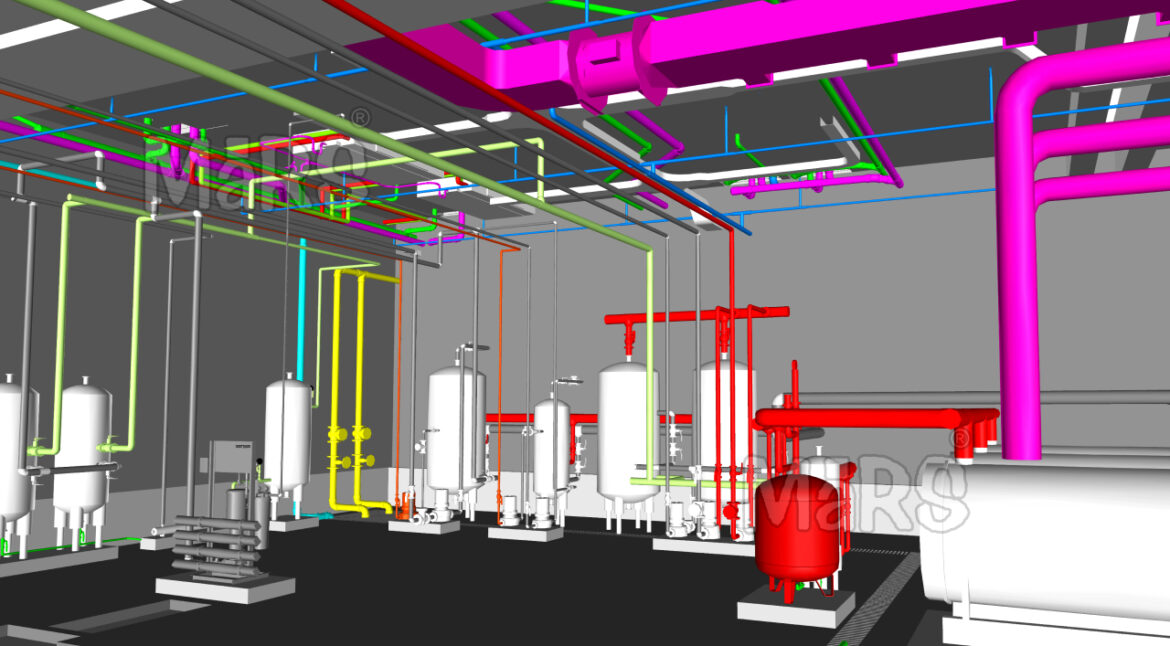
In large-scale projects like airports, hospitals, and high-density residential towers, MEP subcontractors are facing pressure unlike ever before. Precision is non-negotiable. A misaligned duct run or an off-center riser can disrupt concrete pours, delay other trades, and result in costly rework. What used to be minor drawing coordination issues are now subcontractor liabilities with direct financial impact. The demand is no longer just for skilled labor but for tightly coordinated, digitally verified scopes.
General contractors have higher expectations. MEP subcontractors need to work together early, provide accurate models that can be built, and fix any conflicts before construction starts. MEP BIM Services are essential for delivering coordinated, clash-free designs that meet modern project demands. Static 2D drawings, isolated takeoffs, or handwritten markups are seen as outdated. Teams that cannot deliver federated models or contribute to digital coordination workflows are often excluded from major work packages, regardless of their field experience.
BIM and VDC are fundamental tools that determine whether a subcontractor can deliver on time, within scope, and without causing disruption to the overall schedule. The shift is clear. Subcontractors who invest in model-driven workflows are becoming strategic partners on complex jobs. Those who resist are increasingly viewed as coordination risks, often losing out to more digitally capable competitors.
Understanding BIM and VDC
Building Information Modeling is a data-driven process that enables MEP subcontractors to create constructible, LOD-specific 3D models enriched with parametric information, system metadata, and spatial relationships. BIM integrates geometry with specifications such as flow rates, voltage requirements, equipment submittals, and manufacturer data. This allows for the generation of coordinated shop drawings, automated quantity take-offs, and precise sleeve and embed layouts. BIM becomes the foundation for clash-free coordination, prefabrication planning, and on-site layout using total station or laser-guided systems.
Virtual Design and Construction extends the use of BIM into project execution by combining model-based coordination with construction sequencing, cost estimation, and logistics planning. In a VDC environment, subcontractors use federated models to simulate installation workflows, perform constructability reviews, and align trade activities with the master schedule using advanced tools. VDC also supports BIM Execution Plan development, model version control within Common Data Environments, and coordination meeting protocols. VDC is not just about modeling but about integrating scope with time, budget, and field operations in a fully digitized process.
The Role of BIM and VDC in MEP Design and Coordination
In complex projects, MEP systems must be tightly integrated with architectural and structural models, and BIM enables that coordination from the earliest design stages. Subcontractors use discipline-specific authoring tools like Revit MEP or AutoCAD Plant 3D to model systems at increasing LOD 300 to LOD 400 and beyond, aligning with project milestones such as Design Development, Construction Documentation, and IFC Construction sets. Coordinated BIM models allow subcontractors to visualize spatial constraints, resolve interferences through clash detection in Navisworks, and validate clearances for equipment access, maintenance zones, and code compliance.
Virtual Design and Construction enhances this process by embedding those coordinated models into live project workflows. Using 4D sequencing and linked look-ahead schedules, subcontractors can simulate trade sequencing, detect workspace conflicts, and align fabrication and installation with project phasing. VDC also facilitates multi-trade coordination meetings, issue tracking via platforms like BIM Track or BIMcollab, and real-time updates within a Common Data Environment. This integrated approach reduces RFIs, shortens coordination cycles, and helps systems get installed exactly as modeled, which lowers downstream risk and site disruption.
Trade-Specific Coordination Priorities and Advantages
On complex and high-risk projects such as hospitals, airports, or life science facilities, coordination is not just a design exercise but a buildability challenge. MEP subcontractors are expected to model their systems with fabrication-level detail, align with structural tolerances, and plan for access, sequencing, and inspection requirements. This level of coordination goes beyond avoiding clashes. It requires strict control over installation zones, equipment access pathways, sleeve placements, and hanger configurations that must integrate with both design intent and actual site conditions. Subcontractors must navigate limited vertical space, structural congestion, and concurrent trade activities while maintaining installation feasibility.
Trade-Specific Priorities in BIM Coordination:
- Mechanical: Hanger load coordination with structural engineers, duct routing in congested plenum areas, clearance zones for access panels and damper servicing, and modular rack configurations for early prefabrication.
- Electrical: Box layout within formwork, conduit routing through high-density wall cores and floor slabs, clearance around switchgear, and coordination of bus duct runs through shaft zones with specific elevation tolerances.
- Plumbing: Waste and vent slope verification in slab recesses, riser alignment across multiple floor penetrations, fixture group coordination with architectural and ADA requirements, and sleeve configuration within structural embeds.
- Multi-trade alignment: Rule-based clash detection filtered by trade priority, use of laser-scanning data to validate coordination zones, integration of hangers with MEP supports in a shared model, and digital export of layout points for total station use.
Subcontractors who manage these details at LOD 400 and participate actively in coordination meetings with structured issue tracking bring significant value to the project team. Their models are not visual references but construction tools that guide fabrication, staging, and on-site layout. Firms that consistently deliver coordinated, clash-free models supported by accurate spools and layout data are seen as reliable partners, particularly in projects where access, tolerance, and speed are critical to delivery success.
Business and Project Benefits of BIM and VDC for MEP Subcontractors
- Reduced labor downtime when MEP installation is sequenced in VDC environments that prevent trade stacking and workspace conflicts
- Model-based hanger coordination eliminates site-level recalculations by aligning support systems with structural steel and slab penetrations during early coordination
- Accurate sleeve and box-out placement reduces the risk of core drilling, which often results in cost overruns, safety issues, and schedule delays
- Scope clarity improves when trade-specific models are signed off during coordination, reducing change order disputes and overlap with adjacent subcontractors
- Fabrication outputs generated directly from coordinated models enable automated spool drawing creation and cut lists for sheet metal and piping trades
- Logged clash reports and issue tracking provide documented evidence to support change order claims and protect against scope misinterpretation
- Prefabrication becomes more efficient when VDC simulations validate turning clearances, hoisting paths, and access requirements before components leave the shop
- BIM-to-field layout integration uses robotic total stations for detail point placement, eliminating errors from manual tape and string methods.
- Zone-based work packaging improves tracking of percent-complete metrics and helps align installation crews with rolling area turnovers
- Subcontractors who deliver clean, validated models consistently earn preferred trade partner status with general contractors on high-risk projects
Barriers to BIM/VDC Adoption and How to Overcome Them
- Barrier: BIM scopes are often dictated by general contractors or consultants, leaving subcontractors with models that do not reflect fabrication logic or installation feasibility.
Solution: Define trade-specific modeling requirements and LOD responsibilities during preconstruction. Push for early involvement in BIM Execution Plan development so constructability is prioritized over visual completeness. - Barrier: Field teams distrust coordinated models due to past experiences with inaccurate or unverified geometry.
Solution: Integrate total station layout using BIM-to-field point exports, and validate model geometry with on-site verification before releasing it for layout. Run small-scale layout pilots to build field confidence in model accuracy. - Barrier: BIM is often treated as a design-phase deliverable with no connection to actual field work or fabrication workflows.
Solution: Use the coordinated model to drive spool sheet generation, hanger schedules, material take-offs, and installation sequencing. Link BIM output directly to shop drawing production and fabrication tracking. - Barrier: Subcontractors are frequently excluded from real-time coordination platforms and forced to respond to weekly clash snapshots.
Solution: Request access to cloud-based platforms like Revizto, ACC, or BIM Track to participate directly in issue resolution. Assign BIM coordinators who can track, respond, and close clashes in real time without third-party bottlenecks. - Barrier: Fabrication and BIM teams operate in silos, leading to conflicts between coordinated geometry and shop-level detail.
Solution: Adopt model-to-fabrication platforms like Trimble SysQue or eVolve MEP to connect modeling outputs directly with spool creation, tag generation, and cut lists ensuring alignment between coordination and production. - Barrier: BIM investment is underestimated when only software licenses are considered, while coordination time losses and model version confusion go unchecked.
Solution: Assign a trade-level BIM manager responsible for model version control, CDE maintenance, and drawing release timelines. Standardize model sharing protocols and freeze dates to reduce rework and confusion. - Barrier: Use of generic, non-parametric content causes clashes, prefabrication issues, and misalignment in field layout.
Solution: Build or license high-quality, trade-specific Revit families with true dimensions, manufacturer metadata, and prefab-ready connections. Integrate vendor plugins to maintain data accuracy from modeling through installation.
Implementation Best Practices for MEP Subcontractors
- Create a fabrication-first modeling standard by aligning your detailing workflows with actual cut lengths, joint types, and spool logic used by your in-house or outsourced fabrication shop
- Assign a VDC coordinator who not only handles clash detection but also owns the model-to-field translation, including point cloud validation, hanger layout extraction, and layout point exports
- Use BIM to define install sequencing logic at the zone level, breaking up work areas by elevation, system type, or prefab module to improve field productivity and reduce stacking conflicts.
- Link your fabrication model directly to estimating software or procurement tools so that quantity take-offs reflect actual installation assemblies, not generic linear footage or placeholder counts
- Create a model approval workflow that requires sign-off from fabrication, field supervision, and project management before releasing models for coordination or layout
- Integrate hangers, trapezes, and supports as modeled elements using pre-engineered load tables and field tolerances to avoid hanger redesigns and improve field layout precision
- Coordinate sleeve and embed layout based on coordinated models and export layout points before pour drawings are issued, using laser scanning or QA tools to verify positions in the field
- Tag and track BIM issues using coordination platforms like Revizto or BIM Track, and assign internal resolution deadlines tied to spool release or field layout milestones
- Use model version naming that follows trade-install logic (e.g. “LOD400_HVAC_CoreZone1_Approved”) to reduce field confusion and avoid installation from outdated files
- Set up prefab staging logistics in coordination with the model, accounting for lift access, corridor widths, and rigging paths, and simulate it in Navisworks before releasing build sheets
Conclusion
MEP subcontractors who cannot deliver coordinated models, fabrication-ready geometry, or field-verified layout data are increasingly seen as liabilities on complex construction projects. General contractors are prioritizing partners who can contribute to real-time coordination platforms, manage clash-free BIM outputs, and improve installation through model-driven workflows. Firms that still use separate 2D drawings, old markups, or outdated content miss out on valuable work like multi-trade prefabrication, early buying, and special partner projects. Those who are investing in digital capabilities, trade-specific standards, and integrated VDC strategies are reducing labor exposure, improving install accuracy, and becoming indispensable to fast-moving project delivery teams. Falling behind in BIM and VDC adoption is no longer a tech issue; it is a competitive and financial risk that directly impacts future pipeline and profitability.