
Electrical work is one of the most coordination-intensive trades on any commercial or industrial construction project. Conduit runs, cable trays, switchgear, lighting, fire alarm systems, and low-voltage infrastructure all compete for ceiling and wall space alongside mechanical ducts, plumbing pipes, structural beams, and sprinkler lines. Getting that coordination wrong — after crews are already on-site — is expensive, time-consuming, and often avoidable. That is exactly why BIM Services for Electrical Contractors are no longer a luxury. In today’s U.S. construction market, they are a prerequisite for competitive, profitable site execution.
The Hidden Cost of Starting Site Work Without a BIM Model
Most electrical contractors are familiar with the scenario: the GC hands over a set of 2D design drawings, the foreman marks up the prints, and crews begin rough-in. Two weeks later, the mechanical sub has already hung ductwork exactly where conduit needs to run. The result is a field RFI, a schedule delay, and a costly reroute — sometimes all three.
According to Autodesk’s construction research, rework accounts for up to 9% of total project costs in the U.S. A significant share of that rework originates from MEP conflicts that were never resolved on paper before crews mobilized. For electrical contractors, these conflicts translate directly into labor overruns, wasted materials, and strained relationships with GCs and owners.
Building Information Modeling eliminates a large portion of this problem by creating a shared, coordinated 3D environment where every trade’s work is visible and conflict-tested before a single hole is drilled.
What Electrical Modeling and Coordination Actually Delivers?
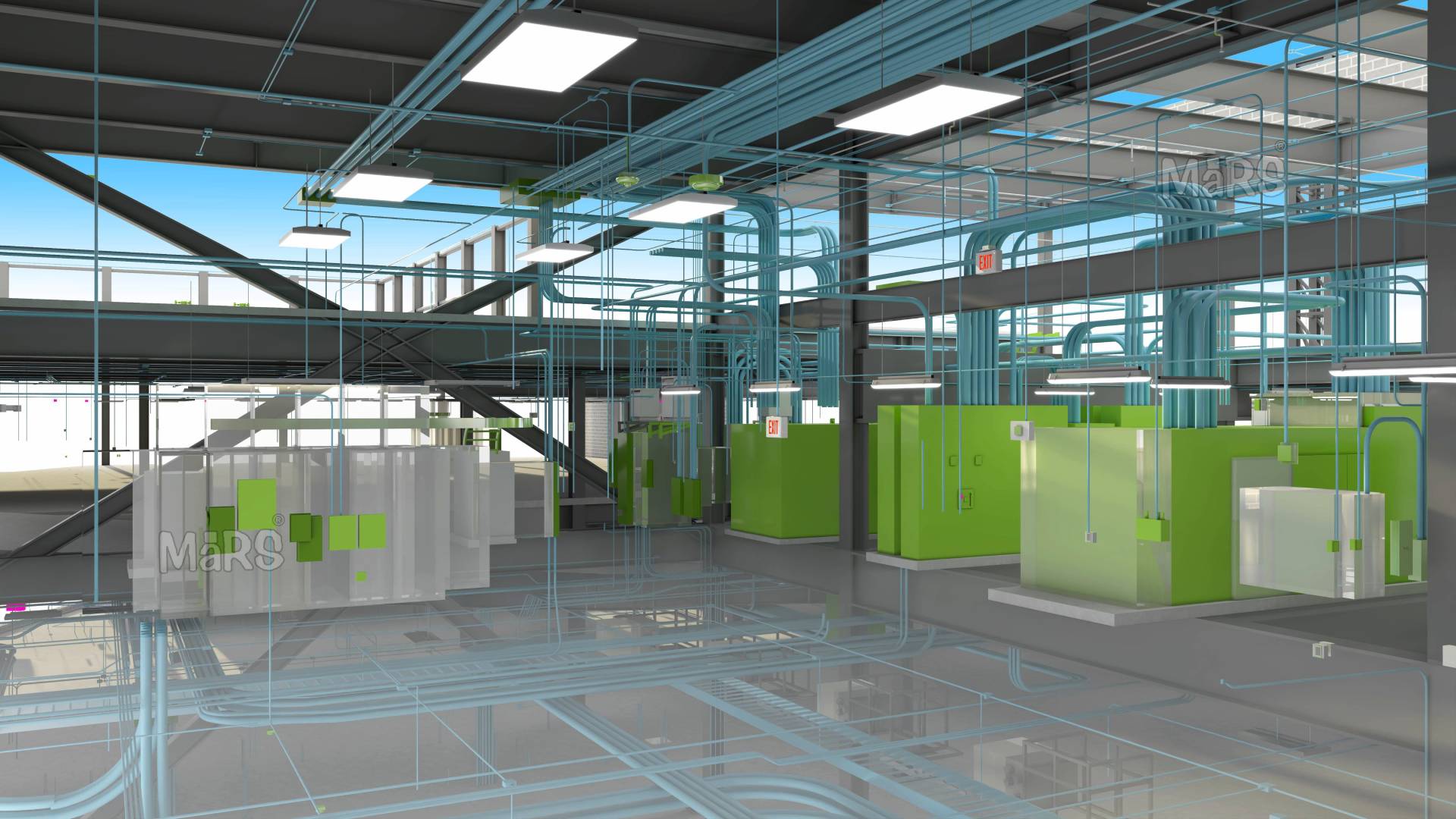
Electrical Modeling and Coordination is the process of building a detailed, dimensionally accurate 3D model of all electrical systems within a project’s Revit or Navisworks environment. This includes power distribution, lighting systems, conduit routing, panel locations, cable tray pathways, and low-voltage systems such as data, fire alarm, and security.
When this model is federated with structural, architectural, and other MEP models, the coordination team can run automated clash detection to identify and resolve conflicts before they reach the field. Here is what that process concretely achieves for electrical subcontractors:
Clash-Free Routing Before Mobilization
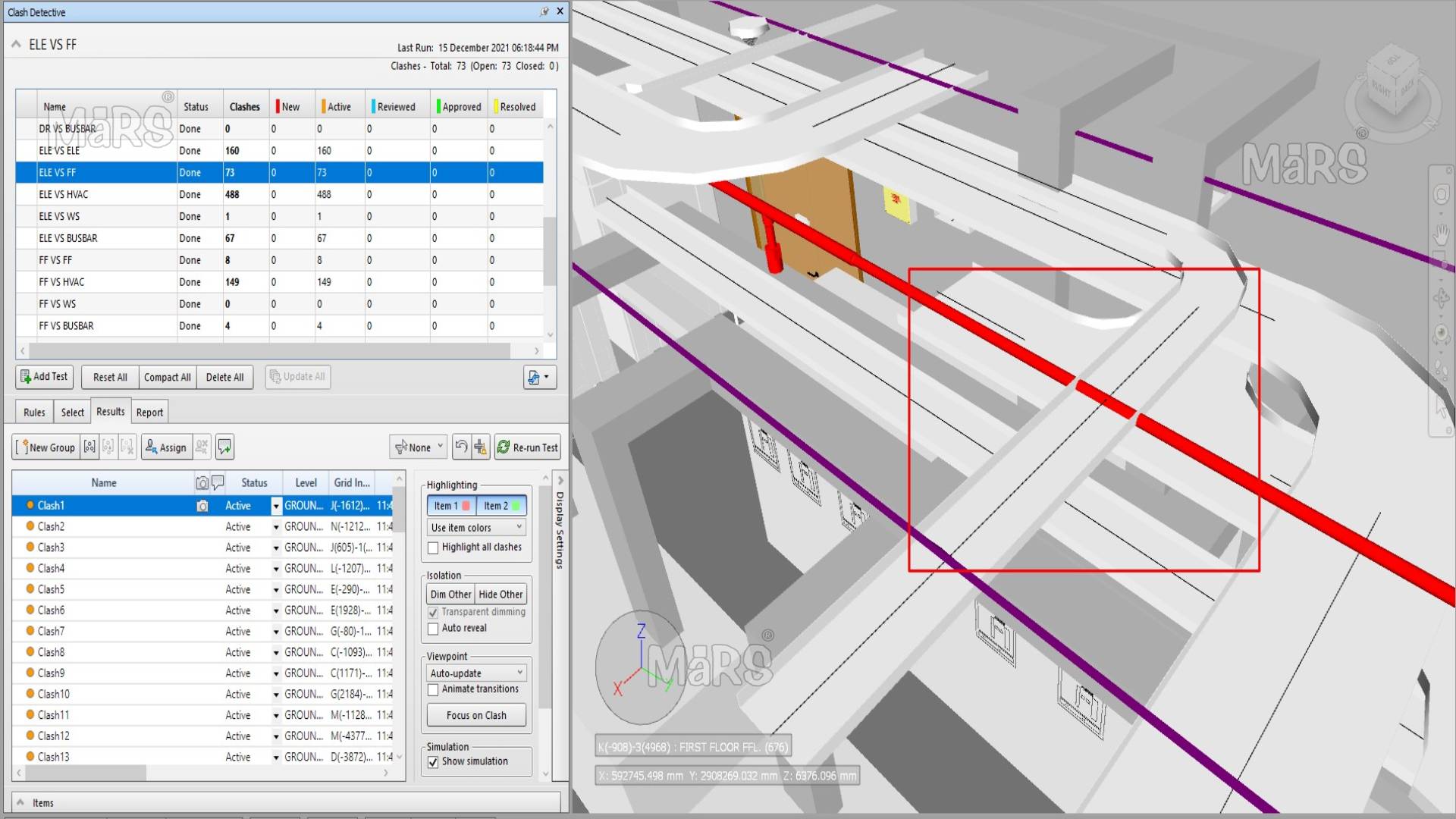
Electrical conduit runs and cable trays are among the most conflict-prone elements in above-ceiling coordination. By completing clash detection and coordination in the BIM environment, electrical contractors receive routing paths that have already been vetted against HVAC ducts, structural members, plumbing mains, and fire protection lines. Crews arrive on-site with a clear, pre-approved path — not a best guess.
Accurate Material Takeoffs
A coordinated BIM model enables precise BIM quantity takeoff for conduit lengths, fittings, wire quantities, and equipment counts. Electrical contractors who bid and procure based on BIM data consistently report fewer material shortfalls and less waste compared to those relying on manual takeoffs from 2D drawings.
Faster RFI Resolution
When the electrical model is live and accessible to the project team, field issues can be visualized and resolved in hours rather than days. Instead of waiting for an architect to redline a 2D drawing, the coordinator can pull up the 3D model, propose a reroute, and get sign-off the same day.
MEP Installation Drawings: From Model to Field-Ready Documentation
A coordinated BIM model is only as useful as the documentation derived from it. MEP Installation Drawings are the field-ready output that translates the BIM model into plan views, sections, and spool sheets that electricians can actually use on the job site.
Unlike standard design drawings, installation drawings reflect the coordinated, as-built-intended routing. They show exact conduit centerline elevations, hanger spacing, clearance dimensions, and junction box locations — the level of detail that field foremen need to direct crews without constant phone calls back to the office.
For electrical contractors on large-scale commercial, healthcare, or data center projects, installation drawings derived from BIM are often a contractual requirement. GCs and owners who mandate BIM Implementation on their projects expect subcontractors to deliver this documentation as part of the coordination workflow.
Prefabricated MEP Drawings: Where BIM Pays for Itself

One of the most compelling financial arguments for BIM among electrical contractors is the ability it unlocks for off-site prefabrication. Prefabricated MEP Drawings are spool-level documents derived from the coordinated BIM model that allow electrical assemblies — conduit racks, cable tray sections, panel sub-assemblies — to be fabricated in a shop environment and delivered to the site ready for installation.
The productivity gains from electrical prefabrication are well-documented. Shop fabrication reduces field labor hours, improves quality consistency, and compresses installation schedules. However, none of this is possible without a BIM model accurate enough to drive fabrication-ready dimensions. A 2D design drawing simply does not contain the spatial precision required to pre-cut conduit or pre-assemble cable tray sections that will fit in a coordinated ceiling space.
For electrical contractors looking to build a prefabrication capability, investing in BIM coordination before site work is the foundational step that makes everything else possible. You can learn more about the broader design and prefabrication workflow through Prefabrication and DFMA Design services.
How BIM Supports Multi-Trade Coordination for Electrical Contractors?
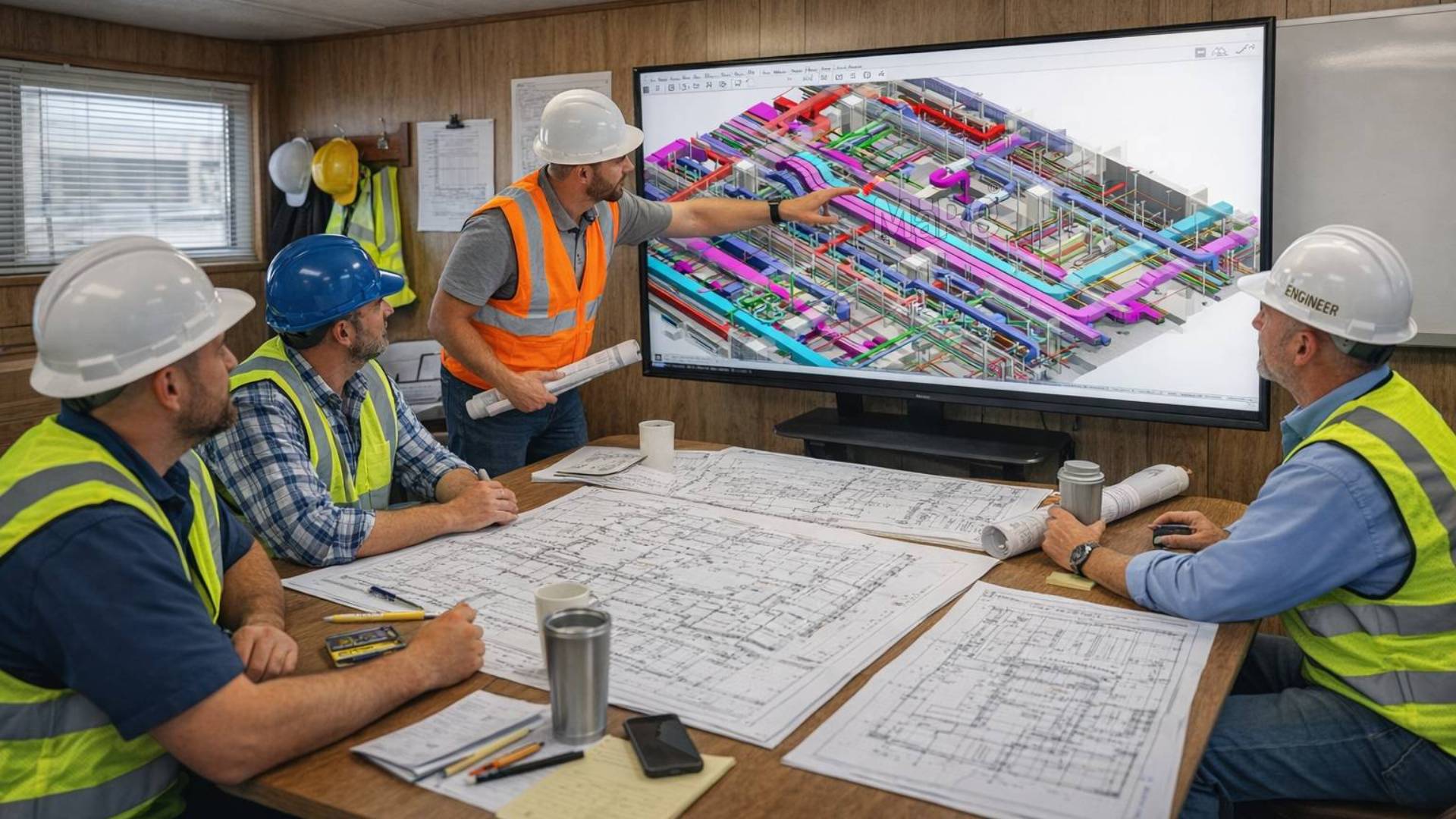
Electrical work does not happen in isolation. Every routing decision the electrical sub makes affects — and is affected by — what the mechanical, plumbing, and structural teams are doing. This is why MEP Coordination in a shared BIM environment is far more valuable than electrical modeling done in isolation.
In a properly structured coordination workflow, the electrical contractor’s model is combined with mechanical, plumbing, structural, and architectural models in a federated file. The coordination team — often a BIM manager or VDC coordinator — runs clash detection, facilitates coordination meetings, and issues a coordinated model that reflects sign-off from all trades. This process is explained in greater depth in how BIM supports multi-trade coordination for mechanical and electrical contractors.
The National Institute of Building Sciences (NIBS) supports BIM-based coordination through its National BIM Standard for the United States, which provides interoperability guidelines used by owners, GCs, and subcontractors across the industry.
For large-scale projects, some electrical contractors partner with dedicated VDC Coordination teams to manage the modeling and coordination workflow, freeing their own staff to focus on field execution.
Project Types Where Pre-Site BIM Is Non-Negotiable
While BIM coordination benefits virtually every commercial project, there are specific project types where beginning site work without a coordinated electrical model creates unacceptable risk.
Data Centers have extremely dense electrical infrastructure — switchgear, UPS systems, PDUs, overhead cable trays, and redundant conduit pathways — packed into tightly controlled environments. A single routing conflict can cascade across the entire power distribution layout.
Healthcare Facilities involve complex electrical systems that must comply with NFPA 99, NEC Article 517, and Joint Commission standards. Coordination errors in hospital electrical rough-in can require wall demolition to correct — a level of disruption no owner will tolerate.
Commercial High-Rise Projects compress multiple trades into constrained floor-to-floor heights. Without BIM coordination, the ceiling plenum becomes a battle zone between trades. Electrical contractors who arrive without a coordinated model typically end up on the losing side of that battle.
Industrial and Manufacturing Facilities involve high-voltage distribution, motor control centers, and complex conduit routing that must align precisely with equipment locations. BIM for infrastructure planning and industrial-scale projects is especially critical here.
What Electrical Contractors Should Expect from BIM Services?
Not all BIM service providers deliver the same level of support. When evaluating BIM services as an electrical contractor, you should expect the following deliverables as part of a complete coordination package:
A coordinated 3D electrical Revit model that reflects all routing decisions, equipment locations, and clearance requirements. Field-ready MEP Shop Drawings that show conduit routing, cable tray plans, panel schedules, and equipment installation details at a level suitable for foreman and crew use. Clash detection reports with documented conflict resolution. Spool-level prefabrication drawings for any assemblies intended for off-site fabrication. And, on projects requiring it, as-built modeling support to capture the installed configuration for owner turnover.
Electrical contractors who want dedicated BIM staffing rather than a project-by-project service arrangement can also explore the option to hire electrical BIM modelers on a dedicated resource basis, embedding BIM capability directly within their project team structure.
The ROI Case: BIM Is Not a Cost, It’s an Investment
The most common objection electrical contractors raise to BIM adoption is cost. BIM coordination services, modeling software, and trained staff all represent upfront investment. But the return on that investment is measurable and consistent.
A coordinated electrical model reduces field RFIs, cuts rework labor, enables material procurement accuracy, and opens the door to prefabrication productivity gains. For contractors operating on thin margins — as most electrical subs do — even a 2-3% reduction in labor cost on a single project can exceed the cost of the BIM coordination package that made it possible.
Moreover, GCs and owners increasingly shortlist electrical subcontractors based on their BIM capability. A contractor who can demonstrate experience with BIM Services for Electrical Contractors, deliver coordinated models on schedule, and integrate seamlessly with project-wide VDC workflows is a preferred partner — not just a bidder.
As the U.S. General Services Administration (GSA) notes in its BIM guidelines, federal projects now routinely require BIM-compliant deliverables from all major subcontractors, further embedding BIM as a baseline competency rather than a differentiator.
Conclusion
Electrical contractors who begin site work without a coordinated BIM model are accepting unnecessary risk — risk of rework, schedule delays, material waste, and strained client relationships. The tools and services to eliminate that risk are accessible, the ROI is proven, and the expectation from GCs and owners is only increasing.
Whether you are self-performing your BIM coordination, partnering with a specialist provider, or embedding dedicated BIM resources within your team, the step to take is the same: complete Electrical Modeling and Coordination, produce construction-ready MEP Installation Drawings, and leverage the model for Prefabricated MEP Drawings before the first crew hits the site.
That is how electrical contractors protect their margins, protect their schedules, and protect their reputation on every project they take on.