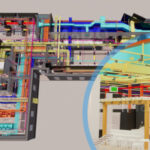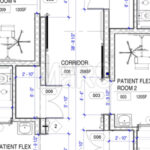
Facility Management has become a critical extension of the AEC value chain, responsible for keeping systems running and protecting the capital investment of complex building assets. In large-scale developments like hospitals, airports, and tech parks, facility managers face pressure to deliver high uptime, reduce energy waste, and manage thousands of interconnected components across MEP, fire safety, and HVAC systems. Traditional handovers such as PDFs, disconnected spreadsheets, or outdated as-builts still dominate most construction closeouts, creating an immediate risk for downstream operations.
This is where BIM has changed the dynamic. During design and construction, models are developed to a high level of accuracy with embedded data like valve tags, panel IDs, duct sizes, and warranty information. When these models are handed off properly, Facility Managers gain more than a visual reference; they inherit a data environment that reflects the true configuration of the building, enabling faster fault isolation, preventive maintenance scheduling, and better compliance readiness. BIM becomes the operational twin of the physical facility.
Forward-looking owners and operators are already demanding BIM deliverables optimized for FM use, COBie parameters, QR-linked asset IDs, and API-ready models that connect with CMMS and IoT systems. This blog explores how BIM supports lifecycle-driven facility management by aligning construction intelligence with day-to-day building operations, minimizing downtime, controlling costs, and enabling real-time responsiveness in smart building environments.

What Is BIM and Why It Matters in Facility Management
BIM represents a digital replica of the built environment beyond geometry; it encodes asset behavior, spatial logic, and lifecycle intelligence. For Facility Managers, this means direct access to system-level insights that were once buried in fragmented PDFs and incomplete closeout packages. Rather than relying on outdated 2D drawings, teams can interrogate a model to locate a chilled water pump, verify its last service date, access the warranty, or cross-reference its tag with the actual installed unit. This depth of data continuity gives FMs the operational edge that traditional handovers lack.
AEC firms today deliver BIM not just as a design tool but as a functional platform for managing post-occupancy performance. BIM serves as the connection point between construction outputs and FM platforms, enabling integration with CMMS, IoT, and BMS systems. When asset metadata follows industry-standard schemas like COBie and IFC, FMs can automate workflows like maintenance scheduling, zone isolation, or fault tracing across systems. That’s the real impact of turning a model into a responsive, operational interface.
BIM for FM delivers high-impact value across
- Precise asset localization with linked component data for valves, AHUs, sensors, and panels
- Data-driven service routines using BIM-integrated CMMS with QR-coded equipment
- Dynamic model updates post-renovation or replacement to avoid stale documentation
- System-level troubleshooting via connected IoT sensors and BMS dashboards
- Retrofit planning using verified clearances, utility routes, and clash-free coordination
- Lifecycle insights to inform capital budgeting and replacement forecasting
- Regulatory readiness with model-based fire, life safety, and environmental compliance
Core Benefits of BIM for Facility Managers
Centralized, Data-Rich Asset Management
Mechanical rooms, electrical panels, fire dampers, and terminal units are tagged within the model, complete with serial numbers, specs, and warranty terms. Facility teams no longer rely on field verification or vendor binders; everything is embedded in the model from day one.
Predictive & Preventive Maintenance
Sensor-based inputs vibration, differential pressure, and temperature, feed into BIM-integrated dashboards. When thresholds are crossed, alerts link back to the asset within the model, including its access path and last service record.
Energy Optimization & Sustainability
MEP performance data synced with BIM allows facility teams to pinpoint overperforming systems, conduct load balancing, and validate energy simulations. Supports LEED performance monitoring, carbon reduction plans, and ESG reporting.
Space Utilization and Facility Zoning
Zones are modeled with occupancy types, adjacency rules, and circulation flows. FM teams use this to manage hot-desking plans, emergency egress zones, and department-level space allocation. Informs space reconfigurations and helps optimize rentable areas in commercial portfolios.
Retrofit and Renovation Efficiency
Models reflect actual duct runs, conduit spacing, equipment clearance zones, and system interdependencies, eliminating guesswork during renovation planning. Reduces RFIs, field rework, and shutdown durations. Delivers accurate field conditions for MEP contractors before mobilization.
Lifecycle Cost and Performance Tracking
BIM embeds replacement cycles, depreciation timelines, and maintenance intervals for all major assets tied directly to space or system zones. FM teams can forecast budget impacts and justify capital planning decisions. Aligns operational performance with asset lifecycle strategy.
How BIM Enhances the FM Lifecycle Process
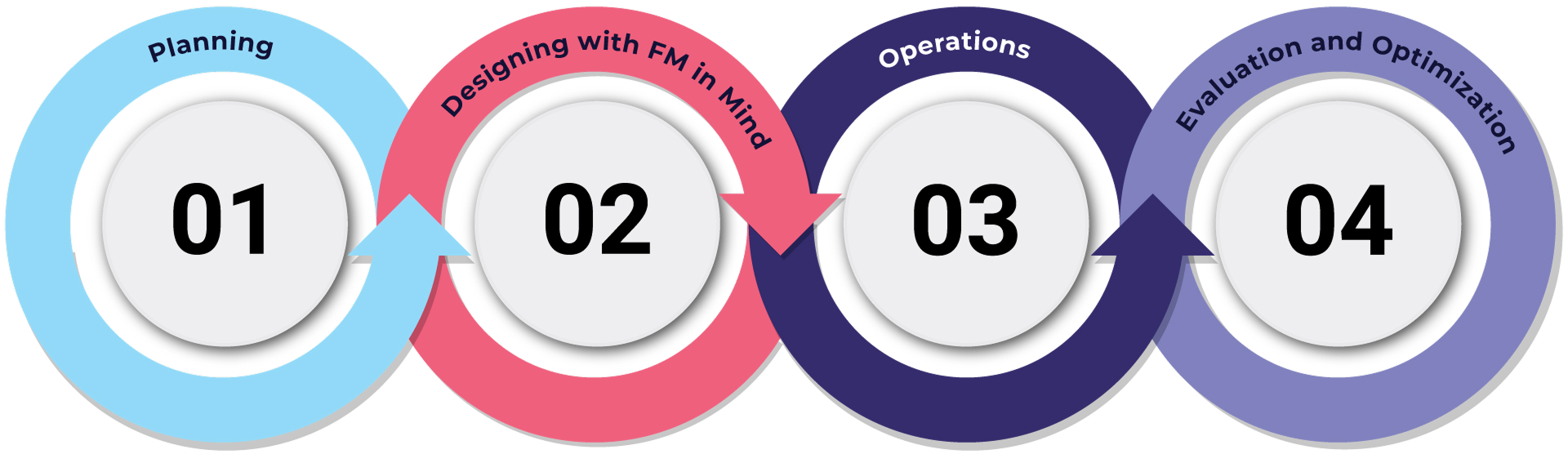
Planning
FM requirements often get ignored during design-phase kickoff, leading to gaps during asset handover. Smart teams now embed FM specifications directly in the BIM Execution Plan, including system-level visibility requirements, asset criticality mapping, and format expectations. This ensures construction models are structured for post-occupancy operations.
Designing with FM in Mind
MEP engineers and BIM coordinators now tag maintainable assets with access clearances, service radii, and equipment replacement zones, reviewed by FM teams before construction begins. This prevents future issues like ceiling conflicts, unreachable valves, or oversights in isolation panel layout. BIM becomes not just a spatial model but a preventive design validation tool for facilities.
Operations
Facility teams don’t open Revit files they use web-based BIM viewers or CAFM-integrated interfaces that let them click a model element and retrieve service history, warranty data, or commissioning logs. Reactive maintenance becomes structured: instead of tracing paper drawings, technicians use linked models with real-time data sync, QR scanning, and mobile access on-site.
Evaluation and Optimization
Once live, FMs use BIM-connected dashboards to benchmark systems: chilled water loops, AHU zones, lighting energy, and even occupancy-based ventilation demand. The model evolves, assets get updated post-replacement, and performance deviations get mapped to design intent. That feedback loop supports post-occupancy evaluations, tuning plans, and capital reforecasting.
Technology Integration: Making BIM Smarter
IoT + BIM + BMS
Facility teams don’t need to sift through BMS dashboards anymore. When IoT devices flag anomalies like a failing actuator or a humidity spike. The BIM model highlights the exact system, room, and asset tag, including its upstream connections. Instead of raw alerts, FMs get location-specific intelligence with embedded maintenance history and access routing, reducing guesswork and technician dispatch time.
Reality Capture and 360° Visualization
Site scans from tools like Cupix or NavVis are now layered into the BIM model, letting FM teams compare model intent against real-world conditions without visiting the site. This helps during contractor changes, post-install QA, or damage inspections in facilities where access is restricted or time-sensitive.
Digital Twins and Simulation
BIM-based digital twins are used for more than energy modeling. they simulate HVAC zoning shifts during partial shutdowns, test fire alarm sequence responses, or visualize evacuation loads per stair core. With machine learning, teams detect underperforming units before failure, feeding that insight into capital reforecasting or planned shutdown sequencing across assets.
Real Business Impact: Tangible ROI from BIM Implementation Challenges & Best Practices
Challenges
- Models are often delivered at LOD 300–350 with missing operational data like maintenance intervals or warranty terms, making them unsuitable for FM systems.
- COBie exports may exist but lack proper asset grouping, system hierarchy, or tag consistency forcing FMs to rework data manually.
- Without agreed update protocols, as-built models quickly become obsolete, especially after tenant fit-outs or MEP upgrades.
- Designs omit service clearances or replacement paths, leading to inaccessible panels or code violations during operations.
- Operational staff often receive native design files with no guidance, viewer setup, or workflow integration, limiting actual use.
Best Practices
- Define what data FMs need (e.g., AHU access, panel IDs, warranty terms), how it’s captured, and where it lives in the model.
- Organize COBie data based on FM logic mechanical zones, electrical networks, and project breakdowns.
- Tag equipment with minimum access zones and annotate replacement routes in coordination drawings.
- Connect BIM to CAFM or CMMS platforms during project closeout: Avoid post-handover integration delays by testing API or import/export during commissioning.
- Train on browser-based model viewers, QR asset lookup, and mobile field apps.
- Assign responsibility for model updates after renovations, equipment swaps, or tenant changes.
Conclusion
BIM now functions as an operational data environment housing Level of Development-defined geometry, COBie-structured asset metadata, and IFC-compatible system intelligence that extends beyond construction into the facility’s operational lifecycle. For Facility Managers overseeing critical infrastructure, BIM enables model-based asset tracking, rule-based preventive maintenance via CMMS integration, and sensor-driven diagnostics through BMS and IoT connections. It supports continuous commissioning, zone-level energy benchmarking, and lifecycle cost analysis by aligning spatial data with FM-specific KPIs. As buildings evolve into cyber-physical systems, BIM provides the spatial-temporal backbone that connects digital twins, mobile workflows, and capital forecasting, transforming static documentation into a dynamic FM control layer.