
Tight service corridors, congested ceiling zones, and overlapping utility systems have made MEP coordination one of the most critical and complex tasks on any construction site. Mechanical, Electrical, Plumbing, and Fire Protection systems often compete for limited space within structural and architectural constraints. In high-value projects like hospitals, data centers, and airports, these systems can account for up to 40% of total construction cost, leaving no margin for installation errors or inefficiencies.
Construction teams now rely heavily on precision detailing to ensure systems are installed without rework, delays, or compliance violations. The increasing use of prefabrication, modular assemblies, and lean sequencing demands accurate, trade-specific installation data well before equipment arrives on-site. MEP shop drawings play a central role in meeting these requirements by translating coordinated BIM models into constructible instructions tailored to each discipline.
Rather than serving as generic documentation, function as execution-ready blueprints that reflect real-world dimensions, elevations, tolerances, and connection points. These deliverables bridge the gap between design coordination and physical installation ensuring that every duct, conduit, and pipe is placed with intent, accuracy, and full alignment with code, clearances, and construction sequencing.
Understanding MEP Shop Drawings and Their Growing Importance
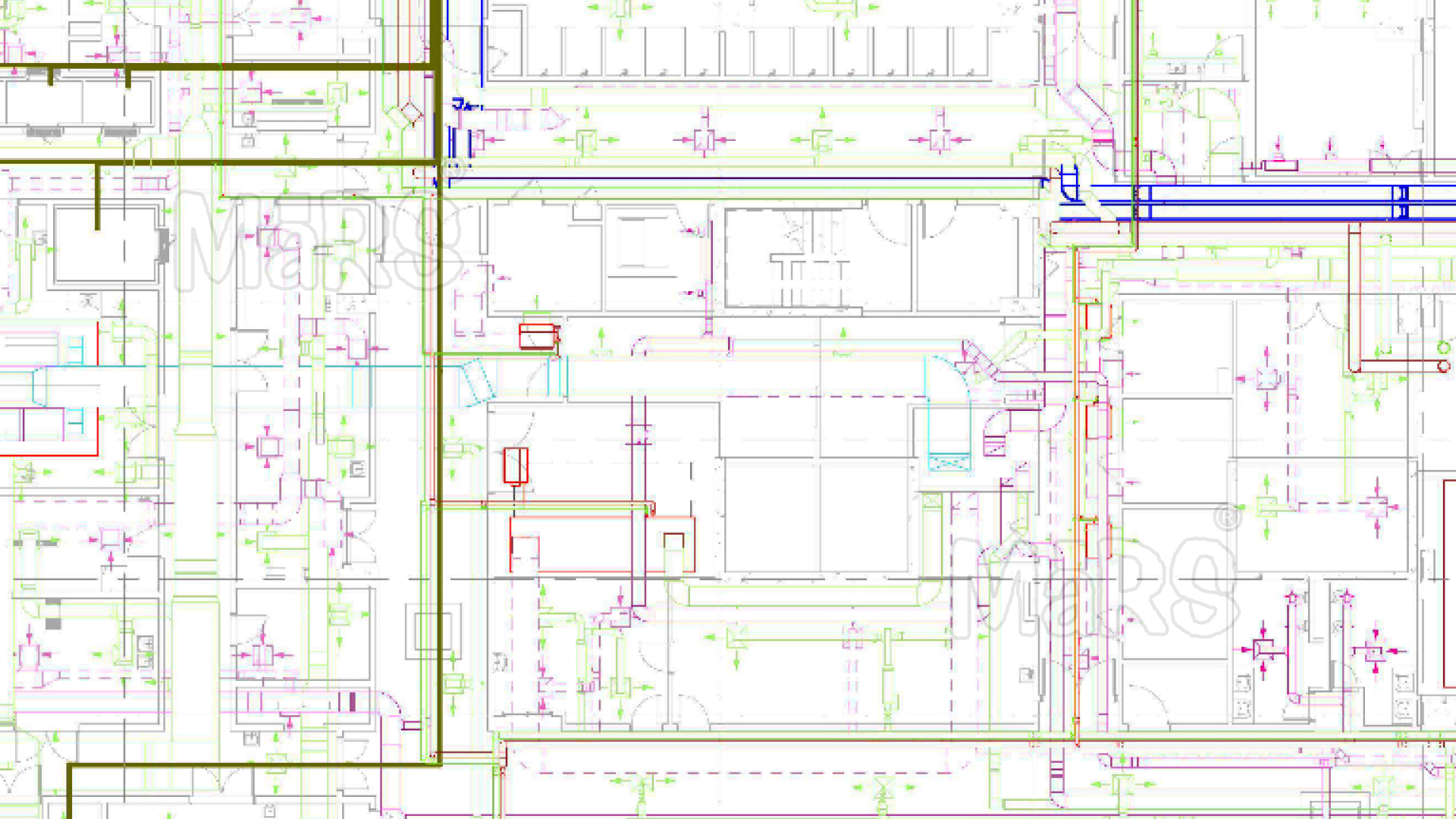
MEP shop drawings provide exact dimensional data, routing logic, and connection details required for installation within live project constraints. Created by trade contractors after coordination, these drawings capture the finalized paths for ducts, pipes, and conduits, including all bends, offsets, hanger locations, and equipment tie-ins. Each drawing reflects buildable geometry, verified against structural and architectural conditions, and aligned with system performance criteria.
In high-density zones such as corridors, risers, and ceiling voids, It define service placement with tight tolerances and coordinated sequencing. They support spool generation for prefabrication, indicate sleeve and embed locations for pre-pour planning, and guide trade crews during field execution. By locking in service routes, access zones, and support strategies, These drawings provide smooth installation workflows and maintain alignment with design intent, code requirements, and project schedules.
Challenges Without Accurate MEP Shop Drawings
Failure in Spatial Load Distribution Across Building Zones
Without coordinated shop-level detailing, high-volume air ducts or large-diameter risers are routed without considering slab loading or allowable service density per zone.
Inconsistent Sleeve and Embed Placement Prior to Structural Works
Lack of sleeve drawings causes missed or misaligned core drillings and embedded components, disrupting post-pour MEP routing and requiring structural modification.
Unresolved Cross-Trade Routing Hierarchy
Absence of defined installation priority between systems leads to overlapping installation claims and sequencing standstills in congested zones.
Deviation from Manufacturer-Specific Installation Constraints
Generic layouts overlook bend radius, expansion clearance, or mounting requirements defined by OEMs, causing performance degradation or warranty conflicts.
Incomplete Coordination of Equipment Service Clearances
Equipment such as AHUs, electrical panels, or pumps are installed without verified access space for filter replacement, maintenance, or disconnection, violating code and impacting lifecycle serviceability.
Obstruction of Life Safety Pathways and Fireproofing Zones
Inaccurate drawings result in penetrations through rated assemblies or encroachment into fire-protected shafts, triggering inspection failures and re-approvals.
Delayed Procurement Due to Undefined BOQs from Layouts
Missing material take-offs and dimensioned runs in drawings slow procurement cycles, affect vendor lead times, and push back installation milestones.
From Design Intent to Fabrication-Ready Drawings
Design intent models define system logic, zoning, and performance targets but omit construction-grade detail required for execution. Fabrication-ready MEP shop drawings transform these early-stage deliverables into installation data aligned with coordinated spatial constraints, service hierarchies, and fabrication tolerances. This transition includes incorporating hanger loads, elevation benchmarks, segment-specific spooling data, expansion compensation, and coordination-approved offsets. The output is not simply a refined version of the design. it is a build sequence embedded with constructability intelligence, enabling accurate sleeve placements before slab casting, generating fabrication-ready spool sheets, and sequencing trade-specific installation in high-density zones where tolerance is measured in millimeters.

Types of MEP Shop Drawings and Their Functions
MEP shop drawings are structured outputs generated after spatial coordination and system validation. These documents serve fabrication, installation, and inspection workflows by embedding system-specific requirements, tolerances, and routing logic. Each type is produced at different phases; some are extracted post-clash resolution, others ahead of slab pour or during equipment submittals. Their content is tailored to the system, project phase and construction sequence.
- HVAC Shop Drawings—Include coordinated duct sizes, offset transitions, access clearance for VCDs/fire dampers, and tagged air terminal interfaces for ceiling integration.
- Electrical Shop Drawings—Capture tray-to-panel connectivity, load segmentations, embedded conduit paths through structural elements, and feeder cable terminations tied to source scheduling.
- Plumbing Shop Drawings—Show vertical stack alignment with core risers, fixture branch routing within wall cavities, cleanout access zoning, and pressure zone transitions for booster integration.
- Fire Protection Shop Drawings—Define head spacing around obstructions, zone valve box positions, main-feed routing through shafts, and seismic bracing requirements.
- Spool Drawings—Break coordinated layouts into labeled sections with weld joints, coupling locations, pre-insulated segments, and factory-mountable assemblies.
- Sleeve and Core Penetration Drawings—Lock in opening sizes, positions, and embedded sleeve elevations prior to slab or wall casting, coordinated with formwork and structural embeds.
- Coordination Drawings—Layer all systems by priority, showing resolved congestion points, fixed hangers, and negotiated service stacking across zones.
- As-Built Drawings—Capture field deviations, reroutes, and final installed geometry for FM system integration and lifecycle asset management.
Each of these deliverables carries construction-critical information that directly supports prefabrication sequencing, trade handoffs, site inspection readiness, and lifecycle documentation. Their accuracy determines how well systems are installed, serviced, certified, and eventually maintained across the building’s operational phase.
Benefits of Accurate MEP Shop Drawings
Zone-Based Routing Precision
Drawings reflect approved routing hierarchies across ceiling voids, risers, and corridors avoiding on-site negotiation between trades during execution.
Toleranced Clash Resolution
Clash-free layouts validated with real equipment dimensions and insulation thickness ensure clearance compliance, not just model-level conflict resolution.
Procurement-Linked Quantity Control
Dimensioned output drives fabrication cut lists and BOQs aligned with procurement cycles, vendor lead times, and delivery windows.
Fabrication-Driven Modularity
Spooling logic embedded into drawings supports factory-built duct sections, pre-assembled pipe racks, and electrical kits that arrive site-ready.
Installer-Level Build Instructions
Annotations include hanger spacing, expansion loops, valve box alignment, and slope direction enabling crews to build without field recalculation.
Code-Conscious Spatial Planning
Fire separation, egress clearance, ventilation offset, and zone pressurization are embedded to meet jurisdictional code approvals in first submission.
Stakeholder Accountability Alignment
Drawings clarify scope ownership across trades like who provides sleeve, who sets hanger, who wires disconnect avoiding ambiguity during installation.
Sequencing and Trade Hand-off Control
Installation order, zone logic, and floor-wise deployment help construction managers assign workfronts and monitor execution progress.
O&M Integration and Asset Referencing
Tagging and layout logic feed directly into CMMS/BMS platforms, enabling asset maintenance, energy tracking, and future retrofit readiness.
Dispute-Ready Documentation
Timestamped drawings serve as evidence of design approval, scope definition, and field accuracy in case of delay claims or inspection failures.
Navigating Tight Spatial Constraints
High-density zones like utility corridors, slab recesses, and ceiling voids often have less than 100 mm of margin for error between MEP systems and structural elements. Accurate shop drawings address these spatial bottlenecks by embedding trade sequencing logic, hanger load coordination, and clearance validation directly into the drawings. Instead of generic layouts, they define priority-based service stacking, pinpoint critical junctions where multiple trades converge, and indicate pre-approved pipe offsets, access hatch locations, and slab penetration tolerances. This level of detailing allows foremen and site engineers to lock in routing decisions before slab casting or partition framing, minimizing rework risks and preserving program continuity in confined areas.
The Role of BIM in Enhancing MEP Shop Drawings
BIM enhances shop drawing development by embedding constructability logic directly into the model. Instead of relying on generic overlays, coordinated BIM environments enable elevation-controlled routing, collision-verified offsets, and trade-priority sequencing all extracted into drawings without reprocessing. For example, hanger insert points, equipment lift paths, and spatial rules around fire dampers or VAV boxes are embedded at LOD 400+, which helps eliminate last-minute ceiling grid reworks or shaft clashes. These aren’t just 3D models they’re fabrication-linked systems calibrated to site tolerances.
Advanced BIM workflows also facilitate zone-based package segmentation and phased drawing generation aligned with look-ahead schedules. With model-linked schedules and visual construction phasing,It can align with floor-wise or riser-wise handovers, reducing site congestion. BIM 360 and similar platforms enable controlled sheet versioning with clash snapshots, submittal sign-offs, and QR-coded component traceability. The result is drawing accuracy combined with trade accountability and installation intelligence, all embedded in a format the site team can confidently build from.
Best Practices for Creating and Reviewing MEP Shop Drawings
MEP shop drawings that truly support on-site execution are not just coordination outputs—they are precision documents that must reflect trade hierarchy, spatial tolerances, anchorage logic, and prefab-ready segmentation. Effective drawing workflows are embedded in construction methodology, not just BIM standards. This means integrating field inputs during preconstruction, mapping drawings to zone-wise progress plans, and aligning deliverables with the fabrication and installation sequence. AEC firms that treat shop drawings as installation kits rather than mere approvals avoid downstream RFIs, field deviations, and scope ambiguity.
Advanced Execution Practices
- Trade Routing Hierarchy Protocols: Define primary vs. secondary service routing like chilled water main overrides electrical lateral in shared zones.
- Precast & Sleeve Reservation Alignment: Integrate with structural embed and core-cut schedules to avoid misaligned slab penetrations.
- Insert & Hanger Load Coordination: Validate anchorage layout for load-bearing capacity, spacing logic, and vibration isolation in seismic zones.
- Tolerance Buffering for Field Variability: Introduce 10–25mm buffer zones around congested service crossings based on site constructability constraints.
- Spool Breakdown by Zone + Kit of Parts Logic: Divide based on install kits that match prefab unit delivery and on-site lifting logistics.
- Drawing-Linked QR/Tagging Protocols: Embed drawing references into tagged elements for on-site tracking and digital field verification.
- Trade-Aware Revision Control: Filter updates by impacted trades like only notify plumbing and HVAC if electrical sheet is unchanged.
- Inspection & Handover Overlay Mapping: Use MEP drawing layers to support fire stopping, acoustics inspection, and post-install QA signoffs.
Choosing the Right MEP Shop Drawing Provider
A qualified MEP drawing provider must demonstrate more than drafting proficiency. They must operate within real-world construction logic. Look for firms capable of translating coordinated BIM models into fabrication-level documentation that aligns with zone-based sequencing, sleeve reservation timelines, and system-specific installation logic. Proven ability to manage multi-trade collision zones, generate hanger load layouts, and embed QR-coded asset data into sheet sets is essential. The provider should offer closed-loop coordination support during early construction phases, handling version tracking, IFC-to-shop transition, spool segmentation, and embed setting, in critical path zones like risers or service corridors. Evaluation should also consider their response turnaround during design RFIs, their familiarity with project-specific LOD mandates (400/450), and their ability to produce drawing packages tailored for prefabrication, inspection sign-off, and post-handover FM integration.
Conclusion
MEP shop drawings operate as operational blueprints that synchronize design coordination with field execution. They define the physical logic behind installation mapping spatial constraints, system prioritization, and fabrication sequencing with millimeter-level clarity. When developed with BIM-driven inputs, trade-specific constructability insight, and code-integrated accuracy, they transition from static documents into dynamic control tools. Construction teams leveraging such execution-grade drawings minimize rework, fast-track MEP rough-ins, and maintain alignment from first fix to commissioning, turning coordination into certainty across every service zone.