MEP coordination represents one of the most complex scopes in a building project, for general contractors managing subcontractor workflows across HVAC, electrical, plumbing, and fire protection systems. Tight ceiling voids, shaft congestion, and interdependencies between structural and MEP components often lead to constructability issues if not resolved early. Manual coordination or 2D overlays fall short in identifying spatial conflicts at LOD 300 and beyond.
Fragmented MEP drawings submitted by separate trades rarely integrate seamlessly. Without federated models, general contractors face unresolved clashes that lead to field-level change orders, disruption in installation sequencing, and deviation from construction schedules. The absence of real-time clash resolution and version control increases RFIs, delays inspections, and creates downstream coordination bottlenecks.
MEP BIM services replace guesswork with data-driven accuracy. By using authoring tools like Revit, clash detection platforms such as Navisworks, and workflows governed by a BIM Execution Plan, general contractors can coordinate all trades within a Common Data Environment. This allows detailed constructability review, optimized prefabrication planning, and quantifiable savings in time, labor, and material cost.
MEP BIM Implementation Challenges
Upfront Capital Expenditure
Implementing MEP BIM workflows requires investment in BIM authoring software (like Autodesk Revit), clash detection tools (Navisworks), high-performance workstations, and cloud-based CDE platforms (BIM 360). The initial cost of licensing, hardware, and skilled resources can be a deterrent, particularly for small to mid-size general contracting firms.
Technical Skill Gaps and Learning Curve
BIM workflows demand proficiency in parametric modeling, system zoning, LOD standards 300–500, and coordinated model federation. In-house project engineers or site coordinators may lack experience in model navigation, clash interpretation, and Revit-based deliverable extraction. This creates a dependency on external BIM consultants or requires comprehensive internal training programs.
Interoperability and File Format Inconsistencies
Projects often involve multiple authoring platforms, such as Revit, AutoCAD, leading to interoperability issues. IFC file exchanges, DWG conversions, and broken metadata between disciplines hinder seamless model federation. These compatibility issues slow down coordination cycles and increase the risk of data loss across trades.
Resistance to Workflow Transition
Field teams and legacy project managers may resist adopting digital coordination methods, preferring traditional 2D drawings or redline markups. This resistance impedes the integration of clash detection reviews, model-based approvals, and issue tracking workflows. The lack of a BIM culture delays collaboration and undermines ROI from MEP BIM adoption.
Absence of Standardized BIM Protocols
Projects without a clearly defined BEP, model element breakdown, or clash resolution matrix suffer from fragmented workflows. Inconsistent LOD definitions, unstructured naming conventions, and undocumented coordination protocols lead to rework and uncertainty in deliverables.
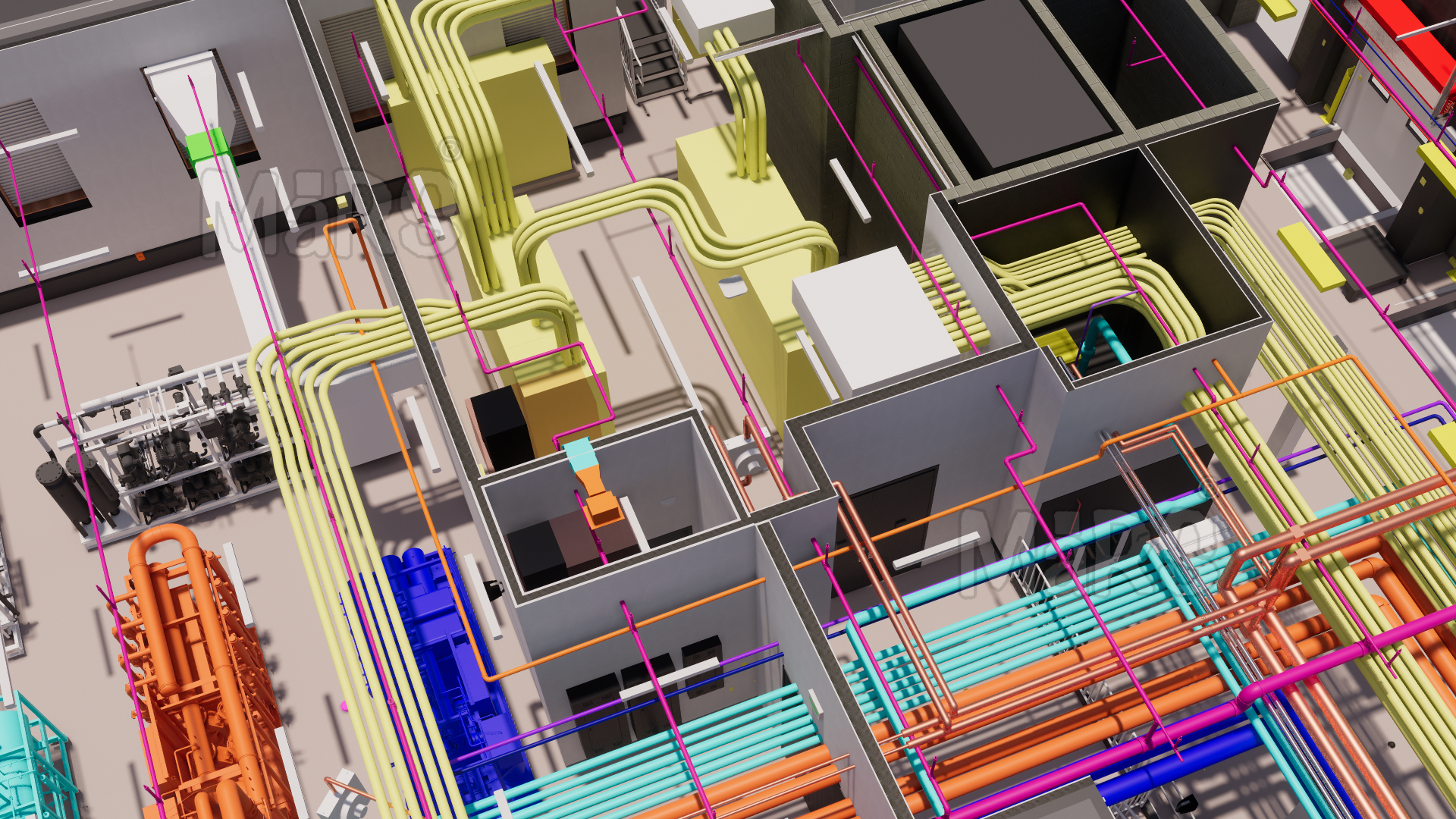
Popular MEP BIM Software Supporting Field Coordination
Autodesk Revit MEP
Used to create discipline-specific 3D MEP models embedded with LOD 400–500 data, enabling the generation of spool drawings, hanger layouts, and installation-ready documentation.
Navisworks Manage
The go-to platform for federating models and conducting trade clash detection across architectural, structural, and MEP systems. Supports issue tracking workflows essential for weekly coordination reviews and installation sequencing.
BIM Collaborate Pro
Provides cloud-based access to federated models, clash reports, and markups for field teams. Enables real-time coordination with subcontractors and consultants, reducing miscommunication and version errors.
Dynamo + Custom Revit Plug-ins
Automates repetitive model updates such as renaming systems, generating hanger schedules, and flagging clearance violations. Reduces modeling time and boosts consistency in large-scale MEP projects.
Revizto
Ideal for onsite use during coordination meetings and installation. Combines 2D/3D viewing with clash status tracking and issue assignment, so teams can resolve problems directly from tablets or field laptops.
OpenSpace BIM or HoloBuilder
Adds model-context site progress tracking through reality capture. Used to validate installed MEP systems against BIM models via 360° walkthroughs, ensuring installation aligns with design intent.
AutoDesk Fabrication CADmep
Supports detailing and fabrication of MEP systems with manufacturer-specific content and direct CNC compatibility. Useful when shifting from coordination to prefabrication and just-in-time delivery.
Fact: A well-implemented MEP BIM workflow can reduce construction cost by up to 52.36% and schedule time by nearly 50%.
Benefits of MEP BIM Services
Improved Spatial Coordination with Federated 3D Models
By combining architectural, structural, and MEP systems into a federated BIM environment, general contractors gain full visibility into congested service zones. This early model-based coordination allows contractors to identify hard, soft, and workflow-based clashes well before construction begins. The result is a faster approval process, more accurate ceiling and riser planning, and fewer inter-trade conflicts on-site, critical in high-density buildings such as hospitals, hotels, and mixed-use towers.
Prefabrication and Reduced Site Rework
MEP BIM supports accurate fabrication drawings that eliminate ambiguity in duct routing, pipe spooling, and cable tray layouts. With detailed dimensions, hangers, and embed locations directly extracted from clash-free models, contractors can shift fabrication off-site. This prefabrication strategy accelerates construction, enhances precision during installation, and significantly reduces site-based modifications and rework. It also minimizes labor downtime caused by uncoordinated sequencing or spatial uncertainty.
Use Case: Prefabrication from clash-free MEP models reduced installation time by 30% for a high-rise in Dubai.
4D BIM for Installation Sequencing and Trade Scheduling
Linking time-based data with BIM geometry enables general contractors to simulate installation sequences and visualize construction phasing. This 4D integration helps prevent trade conflicts, supports proper sequencing of material deliveries, and enables effective execution of MEP-first or top-down strategies. Project teams can also anticipate and prevent downstream clashes, enabling smoother execution and better alignment with master schedules.
Cost Optimization through 5D Estimation
MEP BIM models embed construction data that enables real-time quantity takeoffs and cost estimation. This 5D capability improves budget forecasting and reduces reliance on manual BOQs. For general contractors, this means more accurate bid packages, minimized procurement waste, and fewer budget overruns due to design changes or scope gaps. With improved cost certainty, contractors can manage change orders more proactively and track cost impacts across the project lifecycle.
Note: As reported by the project’s cost control team, integrated 5D BIM workflows reduced contingency allowances by 12% on a commercial project.
Real-Time Collaboration and Issue Tracking
Centralizing all coordination efforts in a Common Data Environment allows every stakeholder to access the latest model versions, clash reports, and resolution logs. Through platforms like Navisworks Manage, BIM Collaborate Pro, and ACC, general contractors can assign, monitor, and close coordination issues with full transparency. This reduces delays in decision-making, improves approval workflows, and builds accountability across engineering consultants, subcontractors, and site supervisors.
Value Across All Project Stakeholders
The value of MEP BIM extends beyond coordination. Site teams gain installation-ready shop drawings that improve field productivity. Project managers benefit from better scope alignment and reduced RFIs. Clients receive a high-quality, defect-free project on time, while facility managers inherit COBie-compliant as-built models for efficient lifecycle operations. MEP BIM not only improves construction outcomes but also delivers long-term operational and maintenance advantages.
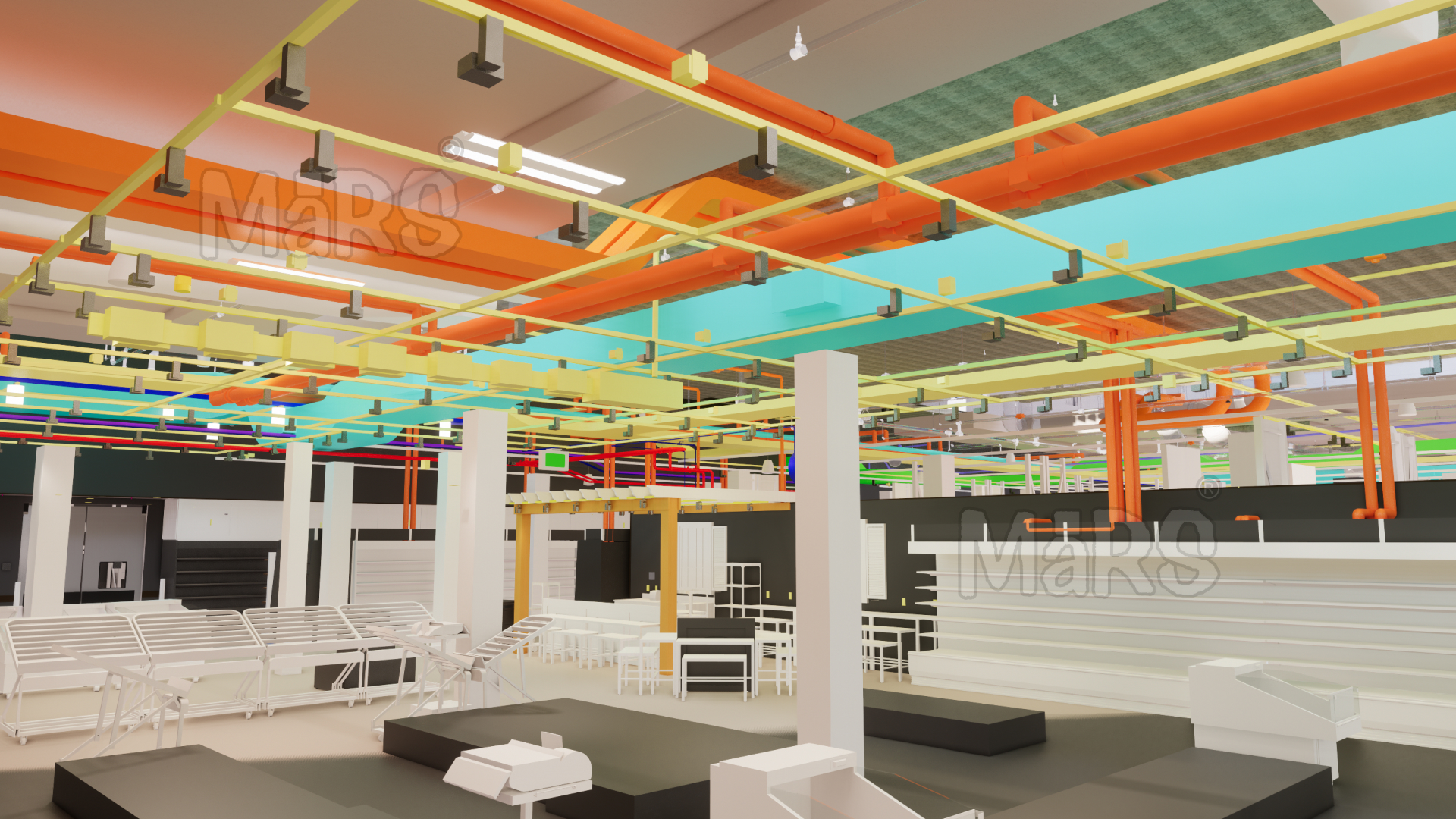
Popular MEP BIM Deliverables Supporting Field Coordination and Installation
Coordinated 3D Models at Construction-Level Detail
Federated BIM models, developed to LOD 300–500, combine architectural, structural, and MEP systems into a clash-resolved environment. These models enable seamless coordination between trades, support constructability reviews, and serve as a live reference for routing verification, clearance checks, and construction phasing. Navigable geometry helps project teams simulate sequences, zone releases, and installation logic with confidence.
Fabrication-Ready Shop Drawings
Construction teams receive detailed shop drawings directly extracted from the coordinated model. These include duct and pipe routing with exact dimensions, section views for system interfaces, elevation markers, and part tags aligned with procurement standards. The segmentation by trade, floor, and service zone facilitates smooth handoffs to subcontractors and aligns with work packages. All drawings are IFC-compliant and conform to regional fabrication codes and tolerances.
Clash Detection Logs and Issue Resolution Matrices
During preconstruction, comprehensive clash reports document hard and soft conflicts between services and structures. Each clash is logged with coordinates, clash type, trade responsibility, and resolution status. These logs form a formal part of coordination sign-off processes and help drive decisions in BIM review meetings. Using structured resolution matrices avoids downstream RFIs and reduces construction-phase ambiguities.
BIM-Based Layouts
Detailed sleeve and penetration layouts, derived from the coordinated model, enable early planning of floor openings, wall cores, and slab embeds. These layouts are aligned with pour schedules and formwork drawings to support proper integration of MEP with structural elements. Accurate placement of sleeves and openings eliminates post-pour drilling, improves site productivity, and reduces the risk of rework or utility clashes.
Model-Based Quantity Takeoffs and Material Schedules
Material takeoffs and quantities are linked to the BIM model and segmented by zone, trade, or schedule. These include quantities for ducting, piping, insulation, cable trays, hangers, and fixtures. Model-linked QTOs support procurement planning, cost validation, and efficient delivery tracking. Visual association with geometry allows instant verification, minimizing over-ordering or on-site shortages.
As-Built BIM Models with COBie Parameters
At closeout, as-installed BIM models are updated to reflect field changes and installation deviations. These models include COBie-compliant metadata for all major MEP assets, along with manufacturer details, warranty information, and scheduled maintenance fields. As-built models support a smooth handover process and provide a foundation for long-term facility management and operational planning.
Conclusion
The next phase of MEP BIM is built around automation, predictability, and live construction feedback. AI-assisted clash grouping and resolution sequencing now accelerate coordination cycles, allowing teams to resolve priority issues based on schedule impact. Smart construction platforms integrate fabrication data with installation logistics, automating hanger placements, bracket detailing, and pipe spool breakdowns directly from the model. Site verification tools using 360° reality capture sync installed MEP systems with the BIM environment in near real-time, helping teams avoid deviation penalties and rework. AR-based install assist, QR-coded asset tracking, and COBie-linked handover models further reduce ambiguity, ensuring the field team has every decision point linked to data, not guesswork.