The commercial construction landscape in the United States has become increasingly competitive. Owners and general contractors are demanding more from their trade partners before a single conduit is run or a panel is set. Building Information Modeling (BIM) has shifted from a nice-to-have technology to a baseline expectation on most mid-to-large commercial projects. Electrical contractors who embrace BIM are not just keeping pace with the industry; they are actively positioning themselves to win more work, reduce costly field errors, and build the kind of reputation that earns repeat business.
This article breaks down how electrical contractors can leverage BIM at every stage of a commercial project to stand out during preconstruction, streamline coordination, and deliver a more profitable outcome.
Why BIM Has Become a Baseline Expectation on Commercial Projects?
A decade ago, BIM was primarily the domain of large design firms and a handful of specialty contractors working on complex hospital or data center projects. Today, BIM for electrical contractors is a standard requirement on most commercial projects exceeding a certain dollar threshold. General contractors building office towers, healthcare facilities, warehouses, and mixed-use developments routinely require trade partners to submit coordinated BIM models before construction begins.
The reason is straightforward: commercial projects involve dozens of systems competing for the same ceiling and wall cavities. Electrical conduit, lighting fixtures, fire alarm pathways, and low-voltage data runs must coexist with HVAC ductwork, plumbing lines, structural steel, and sprinkler systems. Without a coordinated 3D model, these systems collide in the field, causing rework that costs the industry billions of dollars each year. Contractors who can model their scope accurately and participate in coordination meetings with confidence are the ones who get invited back.
How BIM Helps Electrical Contractors Win the Bid?
Winning commercial work starts long before the project kicks off. In the preconstruction phase, electrical contractors who use BIM demonstrate a level of technical sophistication that influences award decisions.
Demonstrating Constructability During Preconstruction
When a general contractor is evaluating electrical bids for a 200,000-square-foot office building, they are not just looking at the bottom line. They want assurance that the electrical subcontractor can execute cleanly and avoid costly surprises. Submitting a preliminary BIM model or a clash-free coordination plan alongside a bid signals that your team has actually thought through the work before pricing it.
Electrical contractors who use BIM as a shared coordination platform demonstrate that they can work within a collaborative digital environment. This matters because general contractors are accountable to the owner for schedule and quality, and they prefer trade partners who reduce their risk rather than adding to it.
More Accurate Quantity Takeoffs and Estimating
One of the most direct financial benefits of BIM for electrical contractors is improved estimating accuracy. A well-developed electrical model allows estimators to extract precise material quantities, including conduit runs, junction boxes, panel schedules, and device counts, directly from the model rather than relying entirely on manual takeoffs from 2D drawings. This reduces the risk of under-bidding or leaving money on the table with excessive contingencies built in to cover uncertainty.
Accurate quantities also support better procurement planning, which helps contractors negotiate stronger material pricing and avoid mid-project shortages.
The Role of Electrical Modeling and Coordination in Commercial Projects
Once a project is awarded, the real work of BIM begins. Electrical modeling and coordination involves building a detailed, dimensionally accurate 3D representation of all electrical systems in the building, then integrating that model with the work of other trades to identify and resolve conflicts before construction begins.
What Goes into an Electrical BIM Model?
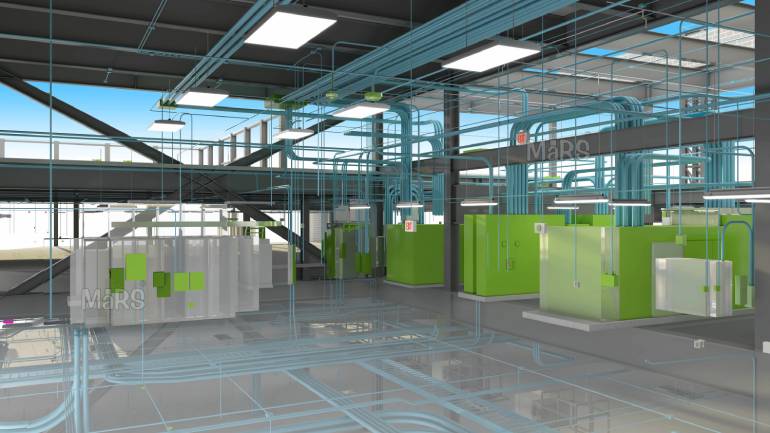
A complete electrical BIM model typically includes:
- Power distribution systems, including switchgear, panelboards, transformers, and conduit routing
- Lighting systems with fixture placement and circuiting
- Low-voltage systems such as data, voice, fire alarm, and security
- Cable tray and conduit rack layouts in congested ceiling spaces
- Coordination geometry showing clearances required for code compliance and maintenance access
The level of detail in the model is governed by the project’s Level of Development (LOD) requirements, typically specified by the general contractor or owner. Autodesk’s BIM documentation outlines how LOD standards affect model content and the expectations placed on each contributing trade.
Clash Detection: Catching Problems Before They Hit the Field
Clash detection is the process of running the electrical model against the models produced by other trades to identify spatial conflicts. A conduit that would run through a structural beam, a lighting fixture location that conflicts with a duct, or a tray system that blocks access to a mechanical unit are all examples of clashes that would otherwise be discovered by a frustrated foreman standing in the field with no good options.
The value of resolving these clashes in the model rather than on the jobsite is enormous. A field rework on a commercial project can cost ten to twenty times more than the same correction made digitally during coordination. Electrical contractors who engage seriously in the clash detection process protect their margins and reduce change order exposure.
Coordination Meetings and the BIM Coordination Workflow
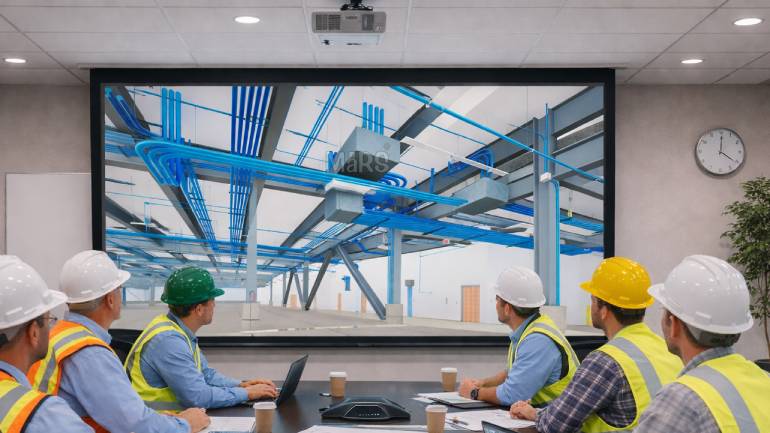
Most commercial projects using BIM hold regular coordination meetings where representatives from each trade review the federated model together. These meetings are typically led by the general contractor’s VDC (Virtual Design and Construction) coordinator and attended by trade contractors, design engineers, and sometimes the owner.
Electrical contractors who show up to these meetings with a current, well-developed model and a clear understanding of their coordination responsibilities are recognized as reliable partners. Those who treat coordination as a bureaucratic obligation rather than a value-adding process often find themselves absorbing the cost of problems that could have been prevented.
BIM for MEP Coordination: Working Alongside Mechanical and Plumbing
Electrical work does not exist in isolation. The tightest coordination challenges on most commercial projects occur in the MEP (mechanical, electrical, and plumbing) zone. Electrical contractors need to understand how their systems interact with the work of mechanical and plumbing trades to navigate these congested spaces effectively.
Establishing Space in Congested Ceiling Zones
On a typical commercial office floor, the ceiling plenum must accommodate HVAC supply and return ductwork, sprinkler mains and branch lines, plumbing drain and vent piping, structural members, and all electrical conduit and cable tray. The space available is finite, and every trade is competing for the best elevation to minimize hangers, maintain code-required access, and avoid long runs.
BIM coordination allows the trades and the project team to agree on a coordination strategy for each zone before installation begins. Electrical contractors who are proactive in staking out routing corridors and who bring creative solutions to congestion problems earn the respect of the entire project team.
Using Shared BIM Models for Prefabrication
One of the highest-value applications of BIM for electrical contractors is using the coordinated model to drive prefabrication. When conduit assemblies, panel connections, and cable tray segments are built in a controlled shop environment using dimensions extracted directly from the BIM model, labor productivity on the jobsite improves significantly.
Prefabrication reduces the time workers spend measuring, cutting, and threading conduit in the field, which also reduces the time the project team spends managing congestion in the installation sequence. Contractors who have built prefabrication workflows around their BIM process consistently report faster installation timelines and better margin performance on commercial projects.
Building a BIM Capability: Practical Steps for Electrical Contractors
Not every electrical contracting firm has an established BIM program. For companies looking to build this capability, the path forward does not require an overnight transformation.
Invest in the Right Software and Training
The most widely used BIM authoring platform for electrical contractors in the United States is Autodesk Revit, often used alongside Navisworks for clash detection and coordination review. Some contractors also use Trimble’s MEP-specific tools or Cadline products depending on their market and client base. The software investment is manageable; the more significant investment is in training personnel to use these tools productively.
Hire or Partner with VDC Talent
Firms building a BIM capability from the ground up often find it effective to hire one dedicated VDC coordinator or to partner with a BIM services firm while internal skills develop. This allows the company to take on BIM-required projects without waiting years for full internal competency. Understanding why electrical contractors need BIM before starting site work is the first step toward making a confident investment in that capability.
Build a Library of Standard Components
A significant efficiency gain in electrical BIM comes from having a well-organized library of manufacturer-specific or generic BIM content for commonly installed equipment. Panelboards, transformers, lighting fixtures, conduit fittings, and cable tray components that are already built to accurate dimensions allow modelers to work faster and produce more reliable coordination geometry.
The Competitive Advantage Is Real
Commercial owners and general contractors in the United States increasingly track contractor performance through data, and BIM participation is part of that picture. According to industry research on Building Information Modeling, contractors who have adopted BIM report measurable improvements in project outcomes including fewer RFIs, reduced rework, and better communication with project teams.
Contractors who participate actively in the BIM coordination process are more likely to be invited to bid on future phases of a project, included in negotiated work, and referred to other owners. Those who resist or deliver substandard BIM models become a liability that GCs are hesitant to bring on board.
The electrical contractors winning more commercial work in today’s market are not necessarily the largest firms or the ones with the lowest overhead rates. They are the firms that show up prepared, communicate clearly through shared digital models, and make the general contractor’s job easier. BIM is the tool that makes that possible.
Conclusion
BIM represents a clear competitive advantage for electrical contractors pursuing commercial work in the United States. From more accurate bids and better prefabrication planning to smoother coordination and stronger relationships with general contractors, the practical benefits are well established. The contractors who invest in this capability now will be better positioned to grow their commercial portfolio, reduce their risk exposure, and earn a seat at the table on the projects that matter most.