High-density building typologies and accelerated delivery schedules have intensified the spatial and temporal pressures on MEP integration. As vertical construction increases and systems grow more interdependent; HVAC with BMS, electrical with life safety, and plumbing with vertical circulation. The coordination tolerance between trades has narrowed to millimeter precision. In this environment, traditional methods of overlaying design intent drawings introduce a significant coordination risk during the transition from design development to construction documentation.
MEP systems contribute approximately 30–50% of the total construction budget in mission-critical and infrastructure-heavy projects. The complexity of routing services through interstitial zones, risers, ceiling plenums, and core shafts demands early-phase constructibility validation. Without synchronized coordination among architectural, structural, and MEP disciplines, spatial interferences such as duct-to-beam collisions, conduit penetrations through post-tensioned slabs, or sprinkler coverage misalignments frequently emerge during installation. These discrepancies delay critical path activities, disrupt prefabrication sequencing, and introduce compliance risks with fire safety, accessibility, and mechanical code.
Advanced MEP 3D modeling platforms integrated within a federated BIM environment enable system-level spatial validation, trade sequencing, and constructible modeling from the preconstruction phase onward. These models incorporate system-specific clearance zones, routing logic, LOD 400 geometry, and equipment metadata. By applying discipline-specific clash detection algorithms and integrating point cloud scans or as-built geometry, project teams can simulate and resolve coordination issues in a virtual constructability environment before field deployment. This results in optimized spatial allocation, enhanced prefabrication accuracy, and reduced downstream rework across the MEP scope.
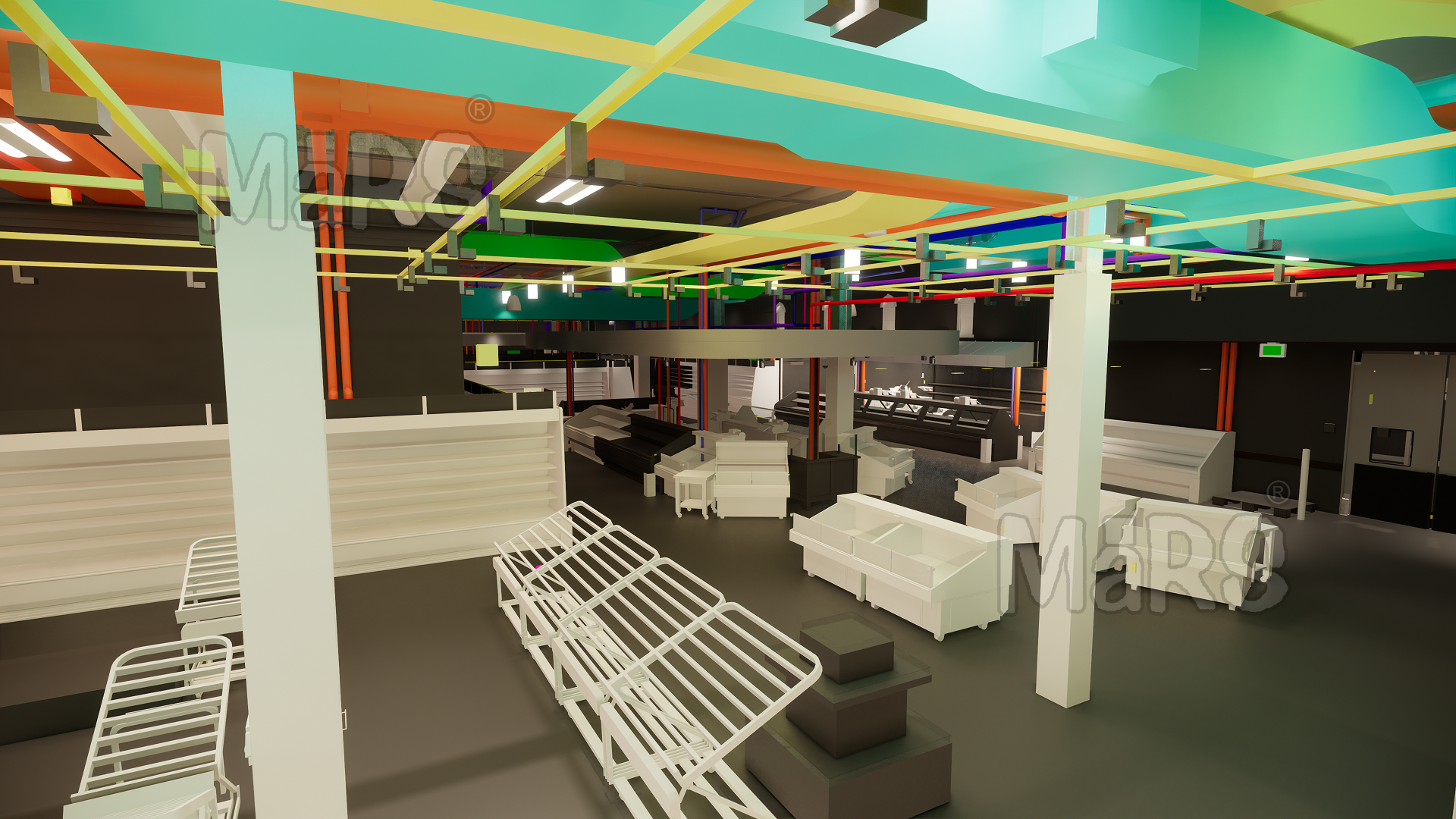
Understanding MEP 3D Modeling & BIM Coordination
MEP 3D modeling operates within a rule-based parametric framework where system components are defined by embedded constraints such as flow rates, pressure loss, voltage drop, and thermal load. Each model element, VAV boxes, primary chilled water loops, feeder conduits, or sprinkler mains, is constructed with system intelligence that governs layout feasibility in real-time. Routing logic accounts for velocity thresholds, bend radius limitations, insulation thickness, and equipment-specific clearance envelopes. Geometry is built to fabrication-ready specifications LOD 400/LOD 450, including tag-based element classification, fabrication part numbers, elevation data, and connection tolerances, enabling direct export to CAM systems for sheet metal and piping spool production.
BIM coordination functions as a multi-system synchronization protocol, where trade models are merged into a federated environment for spatial verification and constructibility sequencing. Coordination platforms execute automated clash sets grouped by system hierarchy, with prioritization matrices based on install sequence, system criticality, and available tolerance margins. Issue resolution follows a model-centric process involving root cause isolation, zone-based clash grouping, and trade-off strategies validated via 4D simulation. Coordination workflows are governed by standardized naming conventions, object classification schemas, and BEP-defined audit trails to ensure traceability of design decisions throughout the lifecycle.
Why Traditional Methods Fail in the Field
Legacy coordination approaches relying on 2D plan overlays, schematic risers, and disconnected trade markups fail to account for spatial tolerances, routing logic, and installation sequencing in high-density MEP zones. These methods overlook elevation stacking, beam-to-duct clearance, firestopping pathways, and field-access requirements, resulting in unresolved interferences such as conduit collisions within structural webs or mechanical trunk lines clashing with ceiling grid assemblies. Without volumetric validation, penetrations through post-tensioned slabs or concrete cores often misalign with embedded sleeves, requiring costly coring or rework. Additionally, static 2D documentation does not support iterative clash resolution or pre-installation phasing, creating downstream fragmentation between design intent and field execution. This leads to scope fragmentation, RFI spikes, fabrication hold-ups, and deviation from approved submittals directly impacting project delivery metrics.
What Sets Advanced MEP Modeling Apart
Advanced MEP modeling differentiates itself through the application of constraint-based routing, coordinated zone reservation, and fabrication-intelligent assemblies that are engineered specifically for spatial compliance and off-site manufacturing. These models are developed using trade-specific authoring tools that allow for multi-system integration with granular accuracy—such as dynamic clearance rule enforcement for NFPA-mandated sprinkler head spacing, voltage drop logic for panel-to-fixture conduit runs, and slope validation for gravity-fed drainage systems. Integrated hanger coordination, seismic bracing zones, and field-weld segmentation rules are embedded directly into the model, allowing prefabrication teams to generate spool sheets, cut lists, and point layouts tied to robotic total station deployment. The modeling environment also incorporates scan-to-model reconciliation, structural opening alignment, and zone-based constructibility phasing to support Lean scheduling and MEP installation tolerances.
Key Technical Differentiators of Advanced MEP Modeling
- Constraint-Based Routing Logic: Enforces minimum bend radius, slope gradients, and conduit fill percentages per system
- Prefabrication-Ready Assemblies: Includes weld breaks, flange kits, and support spacing conforming to shop tolerances
- Code-Driven Spatial Validation: Validates mechanical access, electrical clearance, and plumbing fixture spacing against IBC/NEC/NFPA
- Integrated Sleeve & Embed Coordination: Aligns MEP penetrations with structural formwork and sleeve cast-in locations
- Seismic Zone & Support Bracing Modeling: Reflects anchor spacing, rod hangers, and seismic sway bracing per ASCE 7 or CBC
- Trade-Specific Spool Sheet Extraction: Generates field-ready isometrics with tag coordination and fabrication IDs
- Scan-to-BIM Tolerance Reconciliation: Merges point cloud accuracy (+/- 3 mm) with system rerouting logic
- Field Layout Automation: Links hanger and sleeve locations to total station export for site-based layout traceability
Core Conflict Types & How MEP Models Resolve Them
In-Wall & In-Slab Clashes
Advanced MEP models pre-coordinate conduit banks, sleeve groups, and cast-in place boxes using slab penetration matrices aligned with structural rebar shop drawings. Coordination includes predefined offsets from PT tendon profiles, core drop zones, and MEP embed assemblies. Models also account for conduit bending radius within wall cavities, ensuring clearances are maintained within multi-gang electrical layouts and avoiding drywall bulging or structural interference during routing.
Vertical Shaft Overcrowding
Shaft zones are populated using layer sequencing protocols where high-priority systems are routed first, followed by low-priority systems like comm/data or plumbing vents. Shaft models incorporate anchoring elevations, seismic bracing points, insulation build-up, and firestop collar placements. Clash sets focus on sleeve collar overlaps, trade crossovers, and riser anchorage interference, detected during pre-routing simulations and resolved via offset ladders or re-stack logic.
Ceiling Congestion
Ceiling plenums are modeled with system-level priority zoning, hanger clash buffers, and installation sequence layering. For instance, high-velocity supply duct mains are routed with seismic brace clearances before electrical conduit banks are placed. Systems with strict clearance requirements like recessed luminaires or access hatches. These are validated using modeled “no-go zones” and compliance spheres. Hanger path simulations are conducted to avoid trapeze overlaps and mechanical vibration dampener conflicts.
Equipment Access Violations
Models include parametric “access solids” representing manufacturer-required maintenance clearances for components such as AHUs, MCCs, and RPZs. These solids are treated as hard geometry in clash detection routines. Additionally, mechanical rooms are modeled with egress pathway simulations and component replacement path mapping. Equipment placement validation includes lift radius envelopes, filter pull zones, and NEC 110.26 workspace requirements to mitigate field installation constraints.
Field Fabrication Failures
Fabrication-level MEP models segment systems based on transport limits, joint types, and lift sequencing. Assemblies are modeled with real flange rotation alignment, field joint labeling, and hanging rod submittal data. Spool sheets generated from these models include coordinated tag IDs linked to on-site total station points, ensuring spatially accurate prefab placement and reducing fabrication recalls due to misaligned field conditions.
Benefits of MEP BIM Coordination

Embed & Sleeve Alignment
MEP BIM workflows synchronize concrete pour sequencing with trade embed placement using coordinated 3D models tied to formwork layouts, eliminating field drilling and misaligned penetrations.
Hanger Layout Optimization
Model-integrated hanger families are coordinated against slab openings, ceiling grids, and structural steel, enabling automated clash-free hanger point extraction linked to total station layout coordinates.
Priority-Based Routing
High-priority systems like med gas, fire protection mains, and generator feeds are assigned spatial priority zones within BIM models to avoid downstream re-routing and sequencing delay during installation.
Fabrication-Ready Spooling
LOD 400 assemblies incorporate weld points, joint spacing, flange orientations, and spool break limits, enabling direct fabrication output with traceable tag IDs used for field assembly and QA/QC.
4D Trade Sequencing
Time-linked BIM models identify spatial collisions over time, allowing superintendents to isolate mechanical zones by floor, trade, and sequence; reducing stacking conflicts and enabling lift planning.
Equipment Access Simulation
Models define path of removal for critical assets and simulate lifting radius or dolly movement to confirm service access through finished architectural zones.
Code-Based Clearance Checks
Electrical rooms and mechanical enclosures include modeled working clearances, egress paths, and unobstructed zones based on exact code parameters, verified via hard geometry.
Anchor & Bracing Coordination
Trade coordination models flag overlapping seismic bracing zones, shared rod anchor points, and hangers penetrating fire-rated assemblies preventing field inspection failures and bracing rework.
Overcoming Technical BIM Coordination Failures
Sleeve Misses in Structural Formwork Submittals
Implement BIM-to-formwork integration using slab penetration coordination models locked prior to formwork release, with total station point exports verified against field mock-ups.
Untracked Model Changes Post-Clash Resolution
Enforce model audit trails using issue tracking platforms (e.g., BIM Track, ACC Issues) with clash ID persistence, root cause logs, and change impact mapping for version integrity.
Anchor Conflicts in Multi-Trade Hanger Systems
Coordinate trapeze assemblies with hanger rod spacing rules and embed plate libraries, verified through 3D hanger coordination models linked to shop submittal cut sheets.
Delayed Fabrication Due to Incomplete Spool Zones
Use spool zone lockout logic and fabrication release matrices to prevent partial area spooling before full-trade coordination sign-off, avoiding field hold-ups and retrofit welding.
Routing Collapse in Congested Interstitial Spaces
Run zone-based routing simulations for congested plenum or mezzanine corridors using Navisworks Timeliner and Dynamo-based spacing validation scripts.
Cross-Discipline Annotation & Tag Conflicts
Use shared parameter sets and standardized view templates for discipline coordination views, ensuring consistent tagging and reducing QA/QC submittal rejections.
Model Fragmentation During Trade Handoff
Maintain centralized federated coordination models with linked system control, avoiding divergent trade models with untracked overrides.
Misaligned Hanger & Insert Points in Prefab Kits
Integrate hanger/insert layout models with total station output and laser scan validation overlays to confirm field accuracy before prefab rack deployment.
Uncoordinated Changes During Field RFIs
Use field-to-model communication loops with structured change request protocols and versioned model checkpoints to maintain as-built model alignment and scope traceability.
Conclusion
Advanced MEP modeling functions as a control layer for spatial governance, trade logistics, and system-level constructability within complex AEC environments. Model geometry authored at fabrication detail enables direct linkage between digital coordination outputs and field-level execution, including spool generation, hanger placement, and insert layout. BIM coordination workflows structured through federated environments allow for system prioritization, sequencing validation, and resolution of embedded interferences before site mobilization. This upstream precision translates into increased field installation velocity, reduced trade stacking, validated prefabrication logistics, and clear alignment with project phasing, inspection protocols, and commissioning turnover.