
Support of Excavation refers to engineered systems that provide lateral stability during trenching or deep excavation operations. Common structural methods include soldier piles and lagging, sheet piling, secant or slurry walls, and underpinning. These systems are designed based on geotechnical parameters such as soil classification, groundwater table elevation, lateral earth pressure coefficients, and surcharge loads from nearby structures or equipment. In urban excavation zones, where foundation walls abut lot lines or utility corridors, SOE is essential to maintain site control and structural safety.
SOE construction permits are required when excavation depth exceeds thresholds typically 5 to 10 feet or when work is adjacent to occupied buildings, active utilities, or public rights-of-way. Jurisdictions such as New York City, OSHA 29 CFR 1926 Subpart P, Cal/OSHA Title 8, and CSA Z1203 in Canada require PE-stamped structural designs, protection plans, and means-and-methods documentation for SOE systems. These permits are often interlinked with foundation approvals, dewatering permits, and special inspections, ensuring that structural support is addressed holistically across disciplines. A well-defined SOE Permit Checklist is critical in this stage to track submission requirements, supporting documents, and approval milestones.
A structured excavation permit guide checklist bridges the gap between SOE design, permitting, and field implementation. BIM platforms are now integral to this process used for 3D modeling of SOE systems, clash detection with utility or foundation elements, and 4D phasing of excavation sequences. Permit-linked BIM outputs coordinate with site supervisors and regulatory inspectors, while digital inspection tools ensure real-time updates, GPS-verified documentation, and compliance with jobsite protocols. These tools reinforce safety, accuracy, and traceability before excavation begins.
How the SOE Permit Process Works: What You Need to Know
What Is an SOE Permit?
An SOE permit is a formal authorization issued by the Authority Having Jurisdiction to install temporary structural systems such as secant piles, sheet piling, or soldier piles with lagging; designed to support vertical excavation faces. The permit process validates that the SOE design conforms to geotechnical parameters, accounts for surcharge loads, and complies with jurisdiction-specific standards such as NYC DOB Chapter 33, OSHA 29 CFR 1926 Subpart P, Cal/OSHA Title 8, or CSA Z1203. Permit applications must include PE-stamped drawings, finite element analysis or earth pressure calculations, and a narrative detailing means and methods, all integrated with foundation sequencing and dewatering design.
When Is an SOE Permit Required?
SOE permits are mandated when excavations introduce structural risk to adjacent properties, utilities, or the public domain. Trigger conditions are based on excavation geometry, soil-structure interaction, and proximity constraints. In BIM-enabled workflows, early identification of these conditions during design coordination ensures permit alignment before mobilization.
Typical conditions requiring an SOE permit include:
- Excavation depth exceeding 5 feet in soil or 10 feet in rock, as defined by local codes
- Excavation located within a defined influence zone of adjacent structures typically 1:1 slope ratio or less
- SOE systems installed within 5 feet of underground utilities or municipal infrastructure
- Projects within the public right-of-way requiring DOT or DOB coordination
Temporary works involving:
- Underpinning or foundation wall interfaces
- Dewatering system installation and discharge routing
- Third-party monitoring
- Special inspections per IBC Chapter 17 or AHJ-specific guidelines
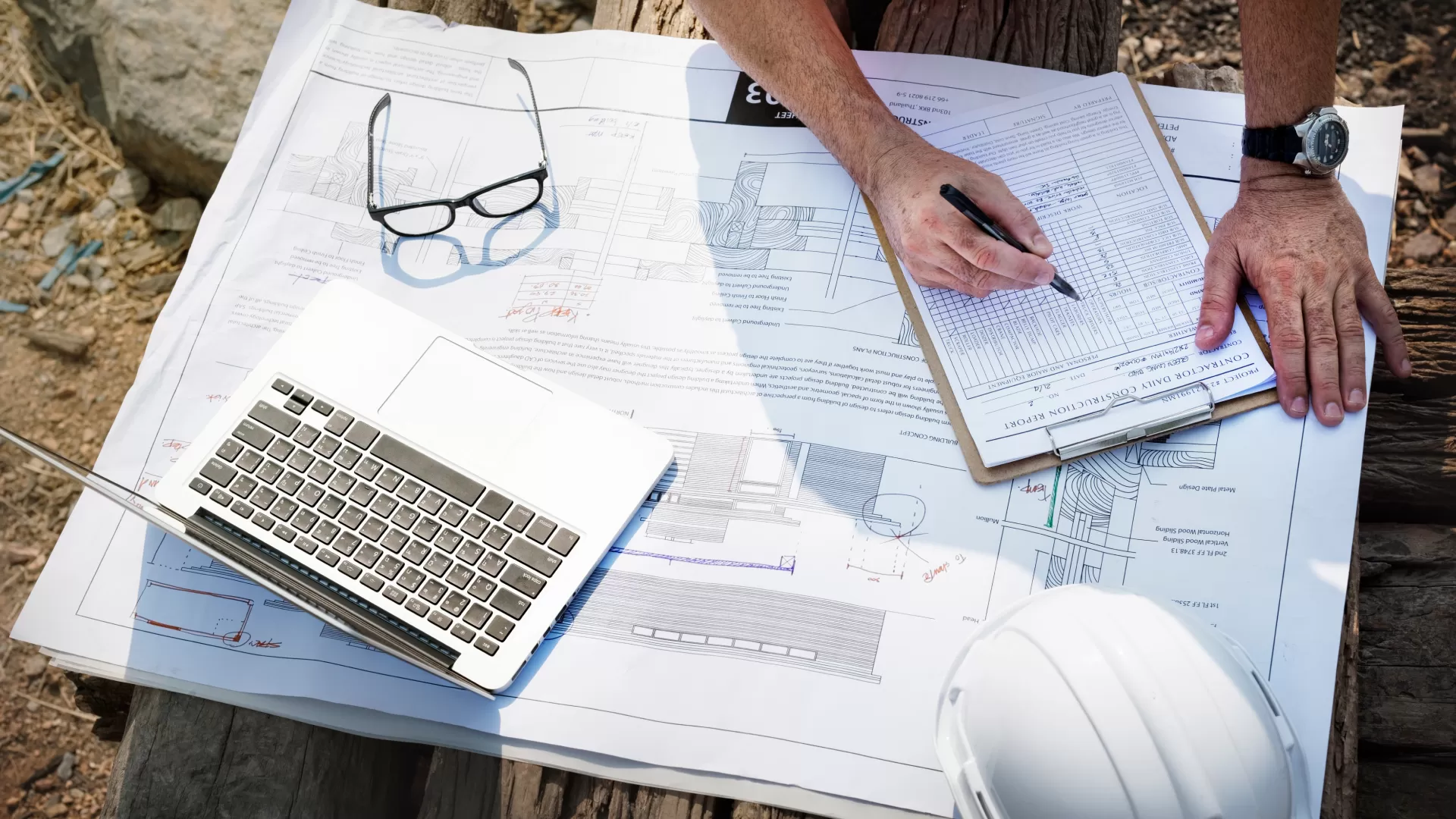
Pre-Excavation SOE Checklist: Must-Have Items Before Breaking Ground
3.1 Site & Subsurface Investigation
Conduct borehole drilling and SPT tests to record N-values, groundwater depth, and stratification per ASTM D1586. Overlay SUE utility data with BIM coordination models and validate via test pits. Perform adjacent structure surveys with crack mapping and establish baseline vibration thresholds.
3.2 SOE Engineering Design
Generate PE-stamped SOE drawings using calculated lateral pressures, hydrostatic head, and surcharge loads. Define elements like tiebacks, wales, and rakers with deflection limits. Use soil-structure analysis software and ensure compliance with Chapter 33 and OSHA Subpart P.
3.3 BIM Integration
Integrate SOE components in the federated model for clash detection with utilities and structural elements. Run 4D simulations to link sequencing with site logistics. Extract permit-ready views for coordination with field teams and inspectors.
3.4 Permit Documentation & Submittals
Prepare a complete submission set including sealed plans, lateral load calcs, protection plans, dewatering layout, and vibration control strategy. Add a narrative of means and methods aligned with local code protocols and field procedures.
3.5 General Jobsite Inspection Protocols
Verify daily that spoil is ≥ 2 feet from trench edges, no suspended loads are overhead, and PPE compliance is enforced. A Competent Person must inspect all slopes, support systems, and access points per OSHA 1926.651.
3.6 Utility Clearance & Environmental Safety
Confirm utility coordination through 811 response and compare with BIM overlays. Protect or reroute exposed lines and install erosion controls silt fencing or check dams as per SWPPP guidelines.
3.7 Access, Egress & Personnel Safety
Install ladders every 25 feet and extend ≥ 3 feet above trench edge. Use separate ramps for personnel and machinery. Check all access systems daily for structural integrity and fall prevention.
3.8 Wet Conditions & Dewatering
Install drainage and pumping systems before digging begins. Maintain dry working conditions and pause excavation for post-rain inspection. Monitor groundwater infiltration using piezometers where applicable.
3.9 Hazardous Atmosphere Monitoring
Test air for O₂ and LEL before entry into deeper cuts. If confined space criteria apply, implement rescue plans, ventilation, and continuous atmospheric monitoring as per OSHA 1910.146.
3.10 Protective System Requirements
Design trench protection sloping, shoring, or shielding based on soil type and load analysis. For depths >20 ft, submit a PE-stamped, site-specific system. No entry is allowed before system installation is complete.
Excavation Operations & Quality Control
Excavation permit guide must follow the approved SOE sequencing plan, with continuous verification of soil conditions, trench geometry, and support installation. Field teams should perform in-situ bearing capacity tests at design elevations and monitor deflection or ground movement using installed instruments. All backfill operations must meet compaction specifications per ASTM D1557, and each lift should be inspected for density and moisture content. Haul logs should track excavated volume, while temporary drainage systems must remain functional throughout. As-built documentation including photos, surveyed cross-sections, and geospatial reports. It should be updated in real time and aligned with BIM models for accurate progress verification and regulatory compliance.
Digital Tools for SOE Permit Management, Inspections, and Field Reporting
| Digital Checklists & Inspection Apps | Permit Submission & Expediting Tips |
| GPS-tagged photos | SOE plans and calculations |
| E-signatures and logs | Utility clearance documentation |
| Offline access for remote sites | BIM-based outputs for coordination |
| Real-time data sync with project systems | Early coordination with AHJ |
| Tools: Trimble, PlanGrid, Lumiform | Permit expediters for complex jurisdictions |

Final Excavation Start Checklist
- SOE permit approved and PE-stamped
- Final geotechnical report reviewed
- Preconstruction surveys completed
- Utility conflicts identified and resolved
- Temporary protection systems installed
- BIM 3D/4D models coordinated with field teams
- Monitoring instruments installed and calibrated
- Pre-mobilization safety briefing conducted
Common Mistakes That Delay Excavation and Jeopardize SOE Permits
- Using 2D-only SOE designs without 3D coordination
- Skipping 4D sequencing, leading to installation conflicts
- Incomplete utility coordination before permit submission
- Missing vibration and dewatering plans for urban sites
- No field validation of BIM models before mobilization
- Delayed special inspection scheduling or documentation
- Lack of alignment between design teams and field crews
Appendix & Resources
This section provides helpful references and tools to support SOE planning and excavation readiness. It includes a printable excavation checklist for SOE, visual guides for shoring systems and soil classifications, and standardized permit templates for efficient submittals. To meet Shoring Permit Requirements, resources are aligned with local code references such as OSHA 29 CFR 1926 Subpart P, NYC DOB Chapter 33, Cal/OSHA Title 8, and CSA Z1203. These codes ensure compliance with jurisdictional mandates and serve as technical foundations for BIM-integrated excavation workflows.
Conclusion: Why SOE Planning and Excavation Checklists Matter
SOE success depends on precise integration of geotechnical data, engineered systems, and permit-aligned documentation coordinated through BIM environments. A checklist-driven workflow enables preconstruction teams to validate site conditions, confirm model-to-field alignment, and sequence excavation with minimal rework. When supported by model-linked submittals and digital inspection protocols, the checklist becomes a compliance mechanism embedded in the construction process.